
AMLA, the EU anti-money-laundering authority in Frankfurt
The EU built an anti-money-laundering supervisor and put it in Frankfurt. AMLA will supervise a selected group of obliged entities directly, coordinate the national supervisors for everyone else, and support the Financial Intelligence Units. For a German institution the question is which of the three applies to it, and from when.
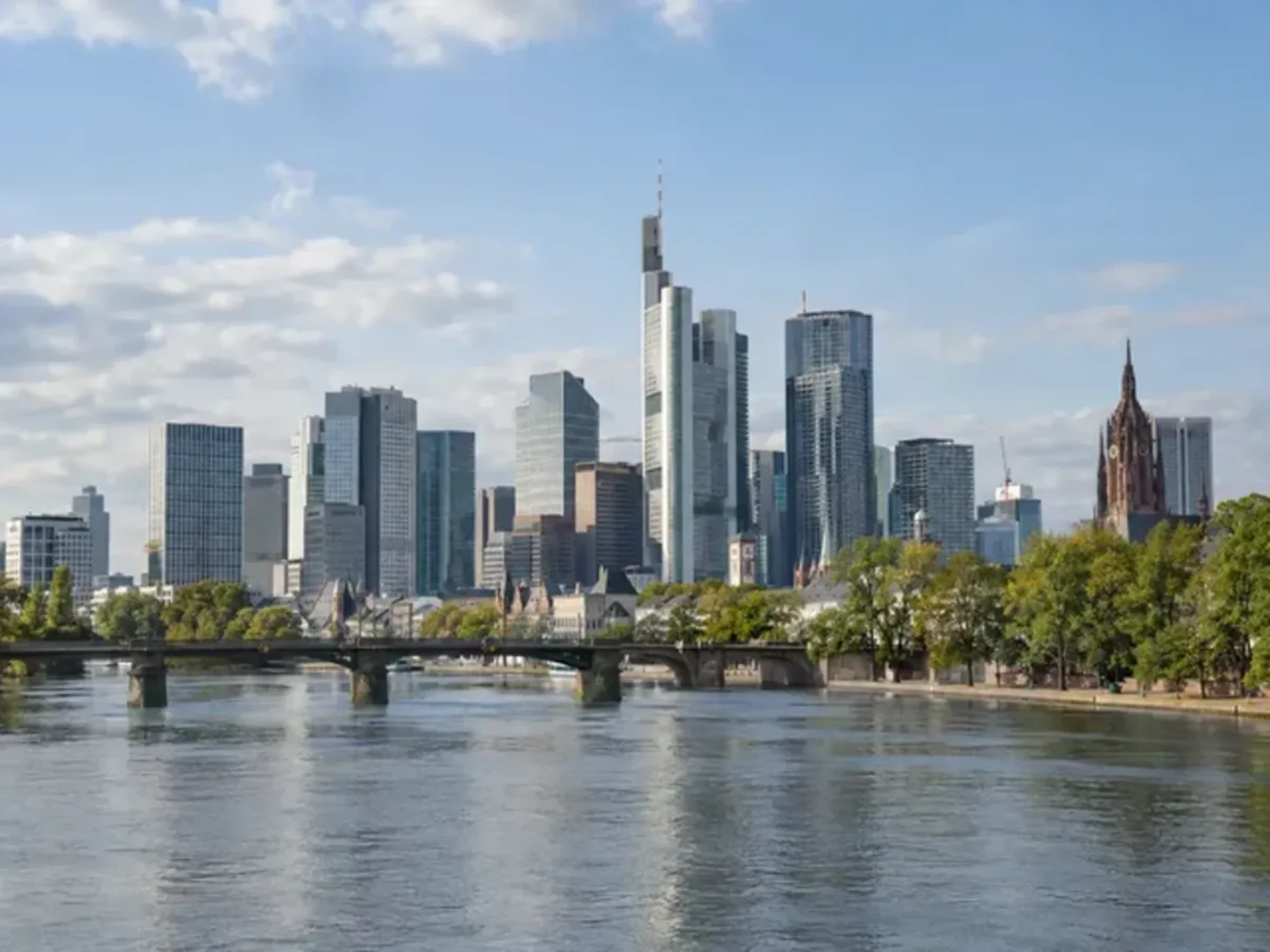
The founding regulation and the seat
AMLA was established by Regulation (EU) 2024/1620, which sets out its tasks, its governance and its powers. The seat decision came separately: in a joint vote on February 22, 2024, the European Parliament and the Council chose Frankfurt from nine candidate cities, with Frankfurt winning a majority in the first round.
The authority is in the MesseTurm. AMLA signed the lease for its office space there, taking the upper floors at Friedrich-Ebert-Anlage 49, after having been hosted in the building since the start of the year. The address matters for the people who will be visiting it: AMLA sits roughly two kilometers from the European Central Bank and in the same city as EIOPA.
Direct supervision of selected obliged entities
The part that changes a bank's life is direct supervision. Under Regulation (EU) 2024/1620 AMLA will select a group of obliged entities operating across borders with the highest risk profiles and supervise them itself, with joint supervisory teams in which national supervisors take part. The regulation caps the first selection at 40 entities.
The timetable runs through the end of the decade: the selection process begins in 2027 and direct supervision of the selected entities starts in 2028. An institution in scope will deal with a team in Frankfurt on its AML supervision while BaFin continues to supervise it for everything else, which is the operating model significant banks already know from European Central Bank banking supervision.
Indirect supervision and the work with BaFin
For everyone not selected, AMLA works through the national supervisor. Its indirect supervisory role covers assessing BaFin's own AML supervision, running peer reviews, issuing guidelines and technical standards, and, in defined circumstances, requesting that a national supervisor act, including a transfer of supervision in cases of serious failure.
The practical effect on a German institution is indirect but real: the expectations BaFin applies will increasingly be AMLA's, written as EU-wide guidelines and no longer as national guidance. BaFin stays the point of contact, the reporting routes stay German, and the content converges. AML in Germany covers the national frame as it stands.
Crypto in the selection criteria
Crypto-asset service providers are inside this regime. Regulation (EU) 2024/1620 brings them into the population AMLA can select from, with criteria reflecting cross-border activity and risk, and the AMLR makes them obliged entities with the full set of due diligence duties.
For a provider licensed under MiCA this means two supervisory relationships on different subjects: BaFin for the crypto-asset service provider license and the market conduct rules, and the AML regime on top, with AMLA in the picture where the provider is large and cross-border. AML in crypto assets covers the sector-specific duties.
The FIU support function
AMLA's third job is to support the Financial Intelligence Units. The regulation gives it a coordination and support mechanism for the FIUs: joint analyses of cross-border cases, the hosting and management of FIU.net as the communication system between them, and standards for how they share information.
This is the part that addresses the structural weakness the FATF kept finding in Europe, where a suspicious activity report filed in one member state about a cross-border scheme reached an FIU with no straightforward route to the others. For an institution filing reports, the output is a supervisor with a wider view of what its reports contribute to.
On the German side: the BBF and the FIU
Germany restructured its own financial crime architecture in parallel. The Finanzkriminalitätsbekämpfungsgesetz, the law on combating financial crime, creates the Bundesamt zur Bekämpfung von Finanzkriminalität, a federal office bringing together the investigative, analytical and coordinating functions, and the Federal Ministry of Finance set it out as the central reform of the area.
The Financial Intelligence Unit moves into that structure, out of the customs administration where it had sat. For an obliged entity the filing duty under section 43 GwG does not change; what changes is who reads the report and what sits next to the reader. Frankfurt now has the EU supervisor and Germany has rebuilt its own authority at the same time.
What the authority adds to the city
Frankfurt gains an EU authority with a supervisory mandate, next to the European Central Bank and EIOPA, which makes it the city where European financial supervision for banking, insurance and anti-money laundering is physically located. The staff build-up runs over several years as the selection and supervision phases approach.
For the professional community the effect is concrete: the people writing the EU-wide AML expectations and the people applying them in German institutions work in the same city, which changes how often they are in the same room. Finanzplatz Frankfurt am Main and compliance in Frankfurt cover the wider setting.
What does AMLA do?
AMLA is the EU Authority for Anti-Money Laundering and Countering the Financing of Terrorism, established by Regulation (EU) 2024/1620 with its seat in Frankfurt. It has three functions: direct supervision of a selected group of high-risk cross-border obliged entities, indirect supervision through the national supervisors including guidelines and peer reviews, and a support and coordination mechanism for the Financial Intelligence Units.
Where is AMLA located in Frankfurt?
In the MesseTurm at Friedrich-Ebert-Anlage 49, where the authority occupies the upper floors under a lease it signed after being hosted in the building from the start of the year. The location puts it in the Messe district, close to the European Central Bank and in the same city as EIOPA, the European insurance supervisor.
When does AMLA start supervising banks directly?
The selection of the entities to be supervised directly begins in 2027, and direct supervision of the selected entities starts in 2028. Up to 40 obliged entities are to be selected in the first round, chosen for cross-border activity and risk profile. Until then, and afterwards for everyone not selected, AML supervision of a German institution stays with BaFin.
Will AMLA replace BaFin for AML?
No. For the large majority of German obliged entities BaFin remains the AML supervisor and the addressee of the reporting duties. AMLA supervises the selected entities directly and otherwise works through BaFin, setting expectations and reviewing how they are applied. Even for a selected entity BaFin continues as the prudential and conduct supervisor; only the AML supervision moves.
AMLA in Frankfurt and Finance Loop
Finance Loop is the meeting place for the AML community in Frankfurt, the city where the EU authority now sits. Finance Loop events bring money laundering officers, KYC leads and compliance heads together with the supervisors and FIU staff working in the same square kilometers.
Finance Loop is a professional network and has the goal of driving the adoption of emerging technologies in finance, such as AI, tokenization, stablecoins, and DeFi. Finance Loop helps its members build skills and personal networks in these fields: Investment & Digital Assets, Payments & Digital Money, Digital Infrastructure & Sovereignty, and Risk & Compliance.