
Digital Euro Offline
The offline digital euro is the version of the planned digital euro that works without an internet connection. A payment settles directly between the devices of payer and payee, and only the two of them know the transaction details. Dated events on digital money are in the calendar below.
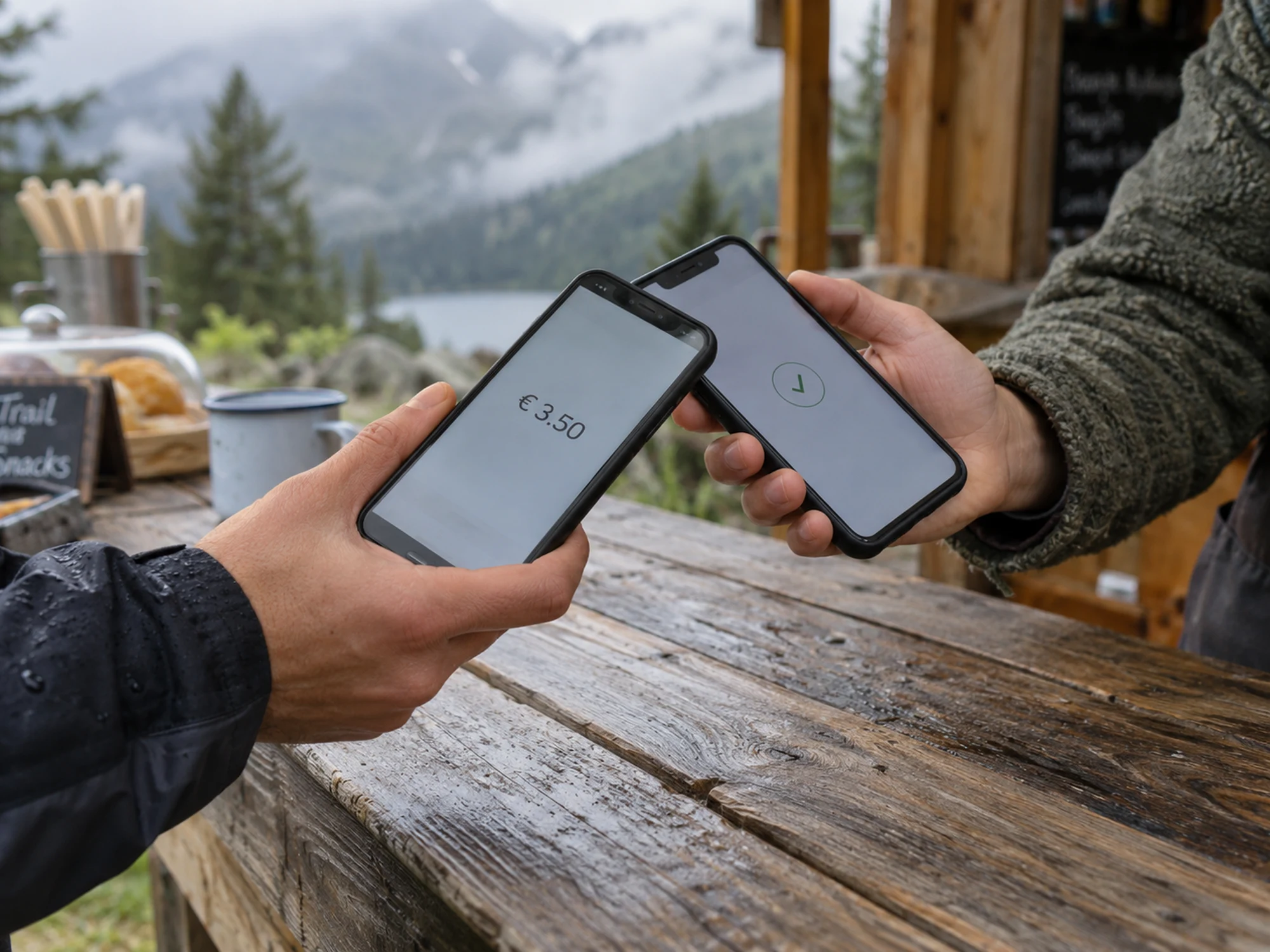
How an offline payment would work
According to the ECB's progress report on the preparation phase, a user first funds an offline balance online or at an ATM. The payment then runs device to device, between mobile phones or payment cards, without a third party. The ECB has examined existing market solutions that settle offline transactions on end-user devices, and its technical work covers delivering, funding and defunding offline wallets as well as anti-money laundering and anti-counterfeiting checks.
For people without a smartphone, the Eurosystem studies smart cards, battery-powered and non-powered. Two non-powered cards need a bridge device to transact: a pocket-sized, battery-powered unit with a screen and keypad, a card reader and NFC. Whether offline payments reach mobile phones depends on duties that the digital euro regulation would place on device makers and telecom providers.
Cash-like privacy and its limits
The ECB promises a cash-like level of privacy for offline payments in shops and between individuals. Personal transaction details would be known only to payer and payee, not to payment service providers, the Eurosystem or providers of supporting services. Because no central ledger records the payment when it happens, the offline balance needs its own, lower cap, as the holding limit page explains.
The European Parliament compares the offline digital euro with physical cash in its position, as Global Government Finance reported: if the device is lost, the offline money is lost with it and is not refunded. Offline payments would be free of charge, a merchant could refuse them temporarily under set conditions such as a power outage, and the liability rules have to deal with double-spending.
Where the legislation stands
The Parliament's economic and monetary affairs committee adopted its position on the digital euro with 43 votes to 14 and one abstention, together with a text on the legal tender of euro cash. The final regulation has to be agreed with the Council. The ECB will decide on issuance only after the EU legislation is adopted; if that happens in 2026, Global Government Finance reports that pilots and first transactions could start in mid-2027, with a possible first issuance in 2029.
For banks and payment service providers the offline function is an engineering task of its own. A distributing bank has to fund and defund offline wallets, the digital euro rulebook sets the scheme rules, and the terminal at the shop counter has to accept a payment that reaches no server.
Upcoming events on digital money in Germany
Finance Loop and the offline digital euro
Finance Loop is a strategic partner of the Digital Euro Association, the Frankfurt think tank behind the Digital Euro Conference. The digital euro pages on this site cover the rulebook, the holding limit and the position of the German banks in the digital euro in Germany.
Will the digital euro work offline?
Yes, the ECB plans an offline function. Users fund an offline balance online or at an ATM and then pay device to device, with phones or payment cards, without an internet connection.
Is the offline digital euro anonymous?
It is designed to be private: only payer and payee know the transaction details, not the payment service providers or the Eurosystem. Anti-money laundering checks are part of the ECB's technical work on offline wallets, and the offline balance has its own lower limit.
What happens if a device with offline digital euros is lost?
The money on it is lost, as with cash in a lost wallet. The European Parliament's position states that lost offline holdings are not refunded.
Do you need a smartphone to pay offline with the digital euro?
No. The Eurosystem studies smart cards, including non-powered cards that pay each other through a small battery-powered bridge device with a screen, keypad, card reader and NFC.
Digital euro offline and Finance Loop
Finance Loop covers the offline digital euro in its Payments & Digital Money track, next to the holding limit, the rulebook and euro stablecoins. Finance Loop is a strategic partner of the Digital Euro Association and brings people from banks, payment institutions and central banking together at events in Frankfurt, Munich, Berlin and Hamburg.
Finance Loop is a professional network and has the goal of driving the adoption of emerging technologies in finance, such as AI, digital payments, cloud and blockchain solutions. Finance Loop helps its members build skills and personal networks in these fields: Investment & Digital Assets, Payments & Digital Money, Digital Infrastructure & Sovereignty, and Risk & Compliance.