
Legacy and Core Banking Modernization
Core banking modernization moves a bank's system of record, deposits, loans, payments and the general ledger, off a legacy monolith or mainframe onto an API-first, cloud-native platform. This page states the choice between a full replacement and a progressive one, the named platforms banks pick between, and where AI coding agents now take on part of the migration work.
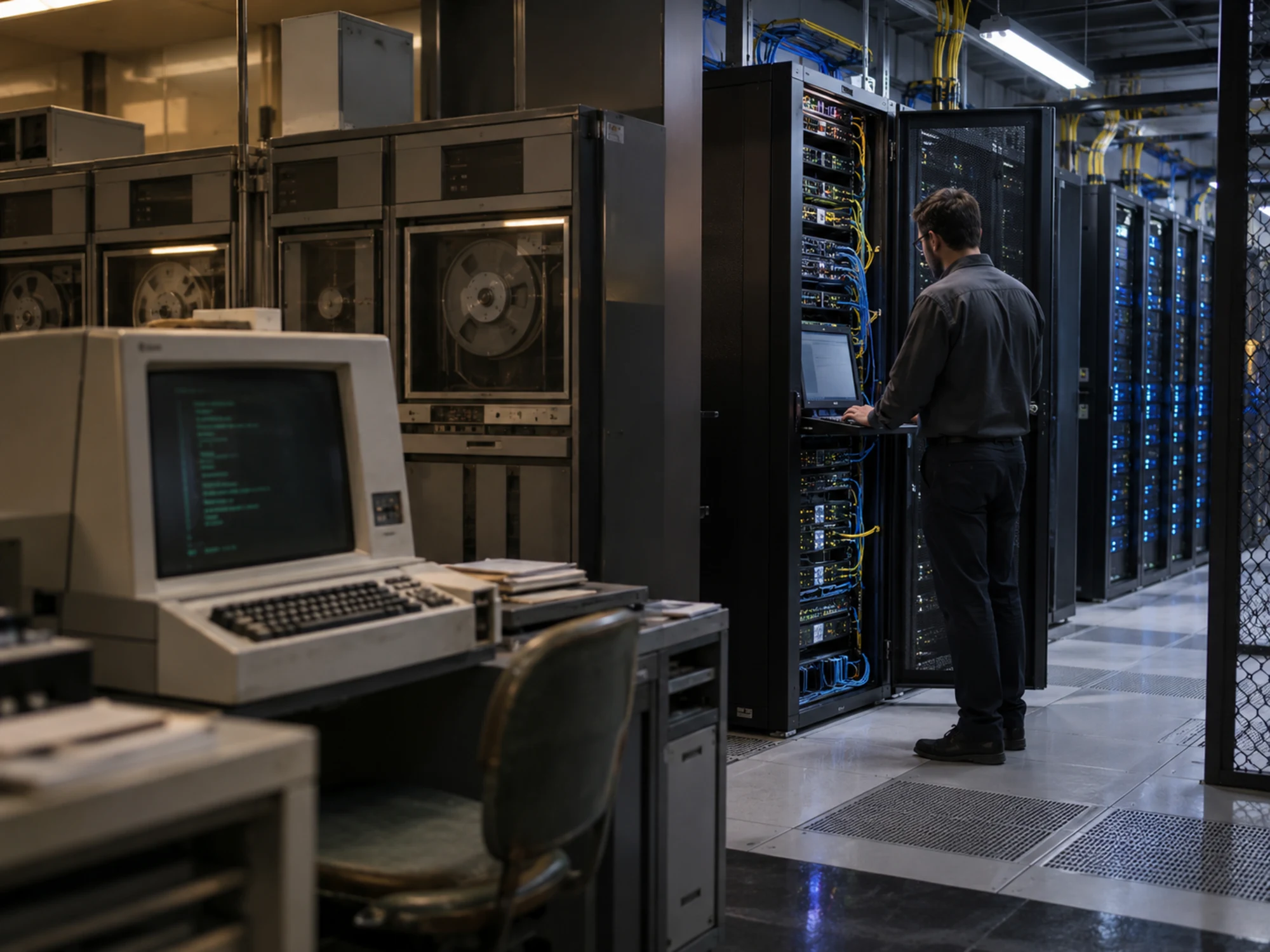
Big-bang replacement or progressive migration
A bank modernizing its core system chooses between two paths. A big-bang replacement swaps the entire core platform in one cutover, which finishes faster but concentrates the risk into a single event. A progressive migration moves one module at a time, accounts first, then payments, then lending, so a failure touches one function instead of the whole bank, at the cost of running two systems side by side for longer. Named core banking platforms banks evaluate for either path include Temenos, Finacle, FIS and Fiserv, each with its own migration tooling and timeline.
A mainframe migration adds its own question: whether to rewrite the business logic in a modern language, or to keep the logic and move only the infrastructure it runs on. Both routes need the bank to first document what the existing system actually does, since decades-old mainframe code often outlives the people who understand it.
Where AI coding agents fit the migration
The part of a core banking migration that consumes the most calendar time is usually not the new platform, but reading and translating the old one: thousands of lines of business logic nobody has fully documented. AI coding agents now take on a share of that reading and translation work, proposing a modern equivalent of a legacy routine for a developer to review, so a developer no longer traces every line by hand. The agentic software factory page covers this pattern in more detail: the migration output stays gated by the same review and test process a bank already runs, whether a human or an agent wrote the first draft.
Upcoming events on banking modernization
What is core banking modernization?
Core banking modernization is the process of moving a bank's system of record, the software that holds deposits, loans, payments and the ledger, off a legacy platform onto a cloud-native, API-first one. It touches both the technical platform and the workflows built on top of it: account opening, transfers, loan origination and the exception handling around each.
What is mainframe modernization?
Mainframe modernization is the specific case of core banking modernization where the legacy system runs on a mainframe. A bank chooses between rewriting the business logic for a modern platform and moving the existing logic onto new infrastructure with less rewriting, a choice that depends on how well the logic is documented and how much of it still reflects a current product.
Core Banking Modernization and Finance Loop
Finance Loop is the meeting place for the engineers and architects running core banking modernization projects and the AI practitioners building the coding agents that now help with the migration work. Finance Loop connects that engineering track with the platform and infrastructure scene across its event cities.
Finance Loop is a professional network and has the goal of driving the adoption of emerging technologies in finance, such as AI, tokenization, stablecoins, and DeFi. Finance Loop helps its members build skills and personal networks in these fields: Investment & Digital Assets, Payments & Digital Money, Digital Infrastructure & Sovereignty, and Risk & Compliance.