
Cashless society
A cashless society is one in which almost all payments run by card, phone or bank transfer and cash plays no part in daily life. No country has reached it. Sweden comes closest, and its central bank now asks for laws to keep cash usable.
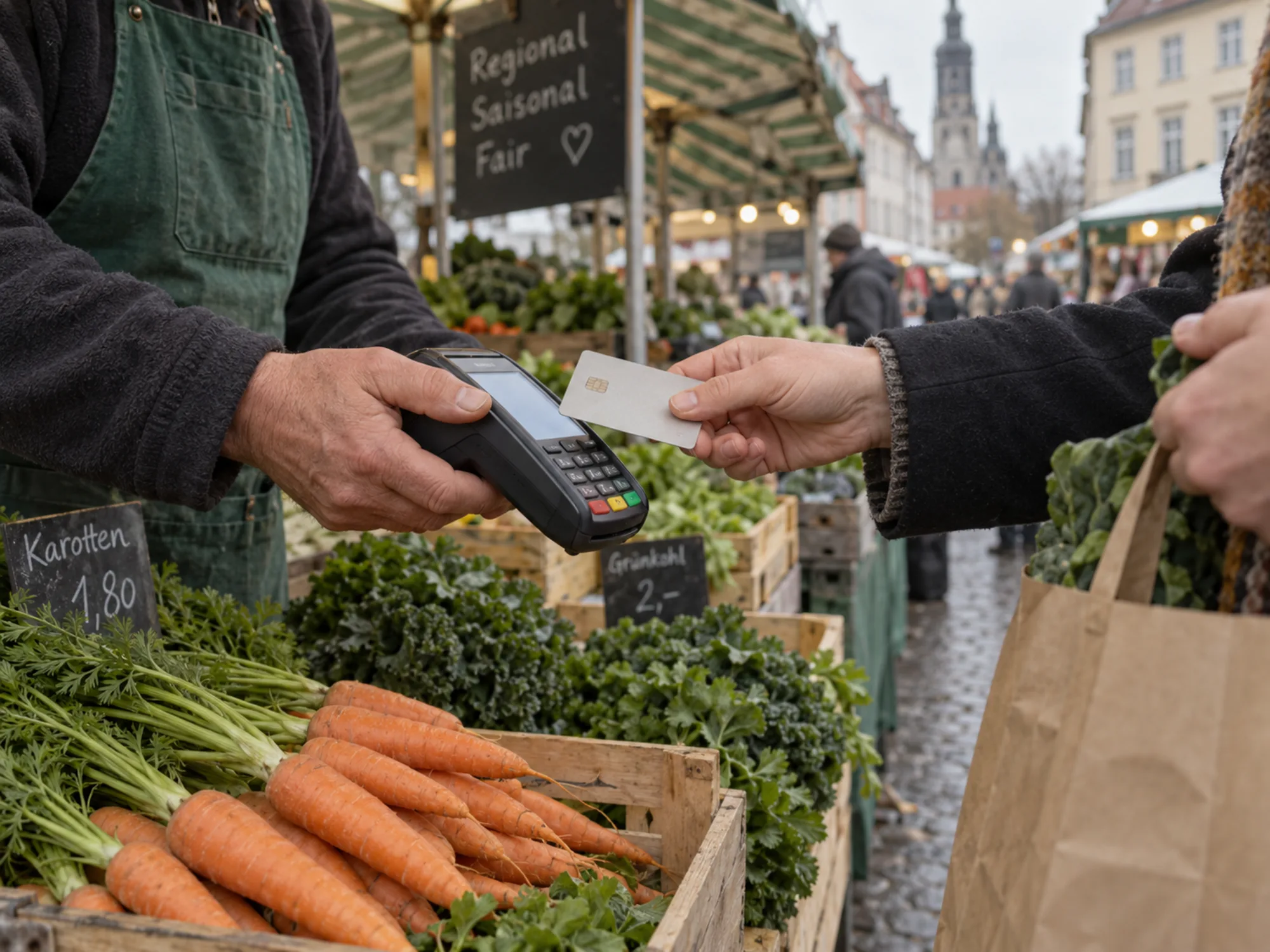
What Sweden shows
The Riksbank Payments Report 2025 finds that about one purchase in ten in Sweden is paid in cash and that around 70 percent of small businesses say they accept it. The Riksbank names two causes: the early instant payment app Swish, which replaced cash between private persons, and the exchange of banknotes and coins in 2015 to 2017.
Sweden passed a law in 2020 obliging large banks to provide adequate cash services. The Riksbank goes further and calls for a duty to accept cash for essential goods and for rules that protect the whole cash chain. Its argument is resilience: a payment system with no cash depends entirely on power, networks and a few providers.
Where Germany stands
Germany is far from cashless. In the Bundesbank payment study card, app and transfer payments passed half of all transactions for the first time, at 55 percent, while 45 percent were still made in cash. 80 percent of respondents said it is important that cash payment remains possible, and only four percent never use it.
The study also records the pressure points. Cash was accepted in 94 percent of in-store purchases, with lower acceptance at self-checkout tills and in public transport, and 29 percent found it harder than two years earlier to reach an ATM. Financial inclusion in payments covers who depends on cash.
Arguments for and against
Supporters point to lower handling costs for merchants and to payments that leave a trail for tax and anti-money laundering checks. Critics name the exclusion of people who cannot or will not pay digitally and the loss of privacy. Both sides start from the same fact: every digital payment is recorded somewhere.
EU policy has chosen coexistence. The legal tender regulation under negotiation would bind shops to accept cash, and the digital euro is designed as a digital form of public money with strong privacy, so that a shift away from banknotes does not leave only private money.
Upcoming payments events in Germany
Which country is closest to a cashless society?
Sweden and Norway have the lowest cash in circulation relative to GDP. In Sweden about one purchase in ten is paid in cash, and the Riksbank asks for laws to keep cash available.
Is Germany becoming cashless?
Germany is moving toward digital payments, with 55 percent of transactions cashless in the latest Bundesbank study. Cash remains the single most used means of payment by number of transactions, and most people want to keep it.
Can a shop in Germany refuse cash?
Under current law a shop can exclude cash if it says so before the purchase. The EU legal tender regulation under negotiation would limit this to narrow exceptions. Legal tender of the euro explains the rules.
A cashless society and Finance Loop
Finance Loop discusses the move from cash to digital payments with the banks and payment providers who manage it, in its Payments & Digital Money track. Finance Loop events in Frankfurt, Munich, Berlin and Hamburg cover Wero and the digital euro.
Finance Loop is a professional network and has the goal of driving the adoption of emerging technologies in finance, such as AI, digital payments, cloud and blockchain solutions. Finance Loop helps its members build skills and personal networks in these fields: Investment & Digital Assets, Payments & Digital Money, Digital Infrastructure & Sovereignty, and Risk & Compliance.