
Legal tender of the euro
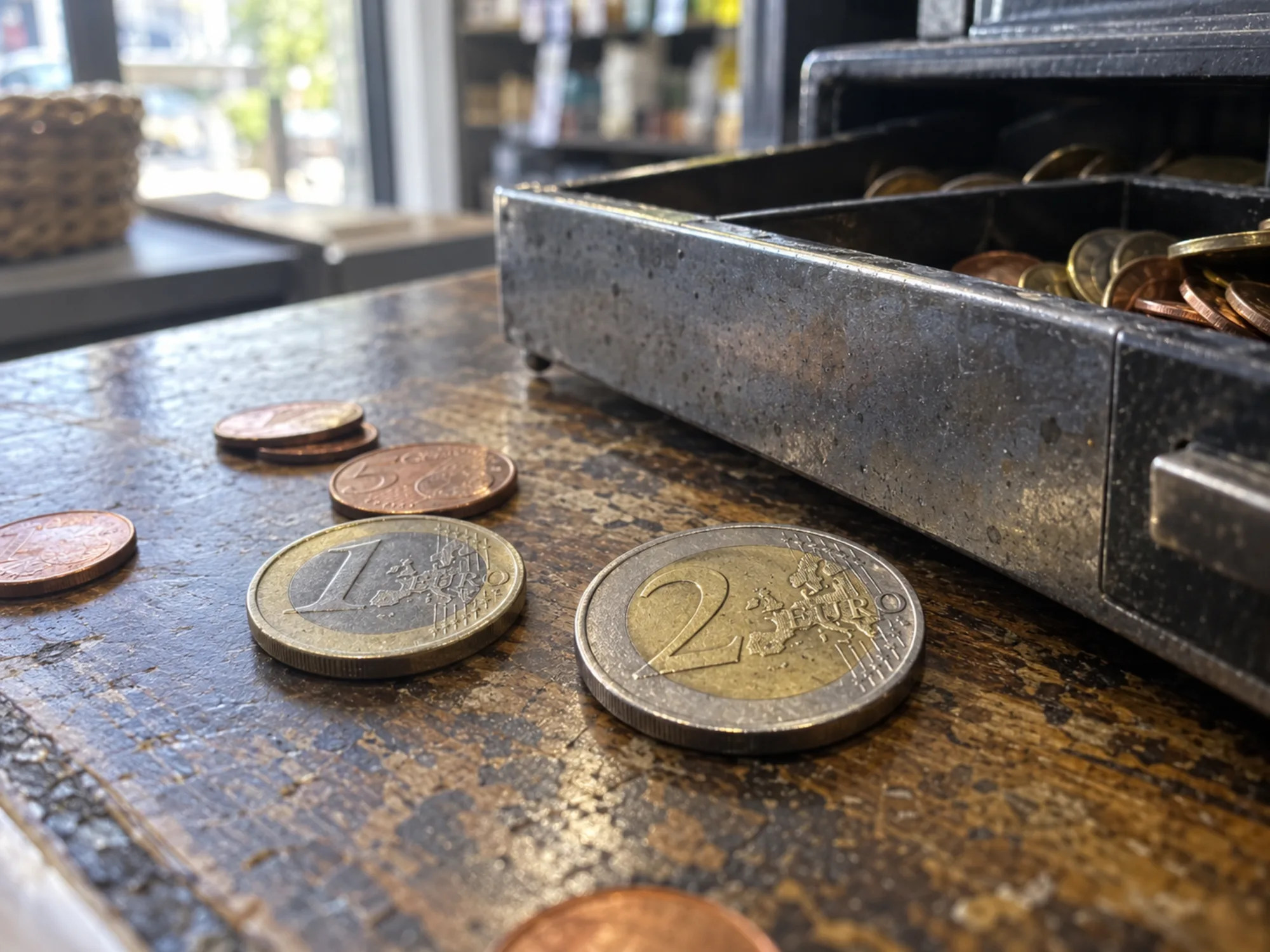
Euro banknotes and coins are the only legal tender in the euro area. Legal tender means, in the words of the European Commission, mandatory acceptance at full face value with the power to settle a payment obligation. The rules have gaps, and the EU is closing them with a new regulation.
Where the rules come from
Article 128 of the Treaty on the Functioning of the European Union gives euro banknotes legal tender status, and Article 11 of Regulation 974/98 does the same for coins, with one limit: no one has to accept more than 50 coins in a single payment. In Germany, section 14 of the Bundesbank Act calls euro banknotes the only unrestricted legal tender.
The Court of Justice of the EU ruled in January 2021, in cases brought against the Hessian public broadcaster over the license fee, that legal tender is a concept of EU law. A public body may restrict cash payment for reasons of public interest when the restriction is proportionate, for example where cash from a very large number of payers would cause unreasonable costs. The Federal Administrative Court then dismissed the appeals in 2022.
Can a shop in Germany refuse cash?
Under current law a private seller may exclude cash if it does so clearly and in advance, because the parties are free to agree another means of payment. A notice at the entrance that only cards are accepted is the usual form.
The Commission proposal on the legal tender of euro banknotes and coins changes this. Shops would have to accept cash, refusals would be allowed only in good faith and for legitimate, temporary reasons, and distance sales such as online shops would stay outside the rule. The European Parliament wants businesses barred from banning cash, and member states would have to monitor access to cash.
Legal tender and the digital euro
The digital euro would be the second form of legal tender. Article 7 of the digital euro proposal gives it that status and bans surcharges for paying with it. Small businesses and non-profit bodies that accept no comparable digital payments would be exempt, and so would private persons. Digital euro legislation tracks the negotiations.
Both regulations were proposed together in June 2023 as the single currency package. In the European Parliament the legal tender file was uncontested, so negotiations with the Council run on it alongside the digital euro.
Upcoming payments events in Germany
What does legal tender mean in the EU?
Legal tender means a creditor must accept the money at its full face value, and paying with it settles the debt. In the euro area that applies to euro banknotes and coins, with limits set by EU law and by contracts.
Do shops in Germany have to accept cash?
Not in every case under current law. A shop may exclude cash if it says so clearly before the purchase. The EU legal tender regulation under negotiation would make acceptance the rule with narrow exceptions.
How many coins must be accepted?
EU law says no one is obliged to accept more than 50 coins in a single payment. The limit comes from Article 11 of Regulation 974/98.
Legal tender of the euro and Finance Loop
Finance Loop follows the single currency package in its Payments & Digital Money and Risk & Compliance tracks, because the legal tender rules for cash and the digital euro decide what merchants and banks must accept. Finance Loop is a strategic partner of the Digital Euro Association.
Finance Loop is a professional network and has the goal of driving the adoption of emerging technologies in finance, such as AI, digital payments, cloud and blockchain solutions. Finance Loop helps its members build skills and personal networks in these fields: Investment & Digital Assets, Payments & Digital Money, Digital Infrastructure & Sovereignty, and Risk & Compliance.