
AMLR Identity Verification
AMLR identity verification concerns how financial institutions establish and check customer identities under the European anti-money laundering regulation. The requirements cover identity information, supporting evidence and the connection between a person and that evidence. They form one part of customer due diligence for banks and payment providers.
The regulation distinguishes identity verification from the wider assessment of a customer relationship. Electronic identification, documentary checks and remote onboarding need to supply the information required for the particular customer. Implementation teams must separate the enacted regulation from technical standards that remain subject to adoption.
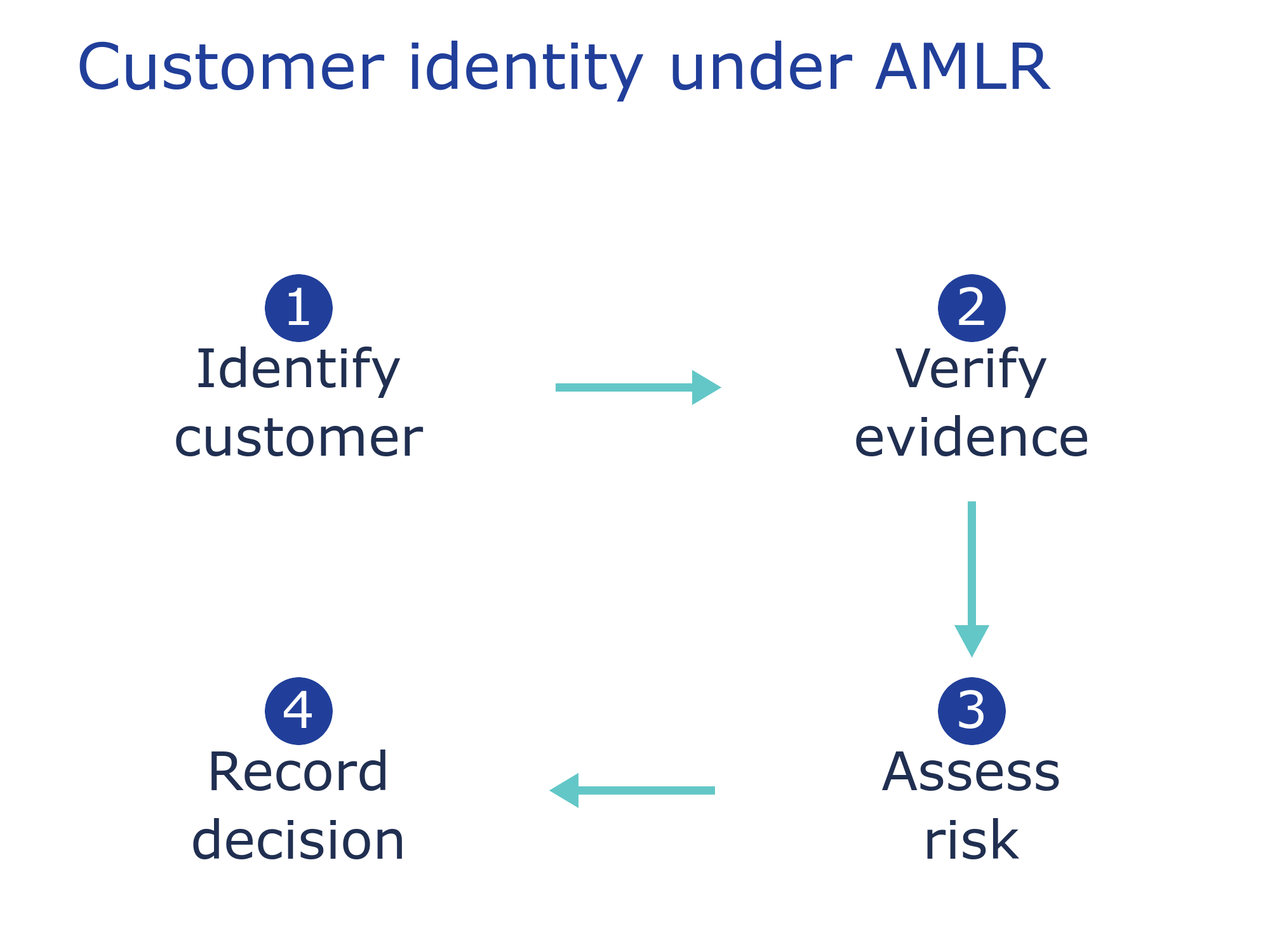
The regulation and the draft standards
Regulation (EU) 2024/1624 generally applies from July 10, 2027, including its customer due diligence requirements. Article 22 addresses identification and verification, while other provisions cover the wider customer relationship. The EU AML package provides the broader institutional and supervisory framework around these rules.
AMLA published its final draft customer due diligence standards on October 1, 2026, and submitted them to the European Commission. These proposed standards require adoption before they become binding delegated legislation. Their proposed application timetable must therefore remain distinct from the application date already established for the regulation.
Information that verification must establish
Institutions need an identification process that collects the customer information required by the regulation. Customer identity, beneficial ownership and the purpose of a business relationship are connected but separate checks. A successful document inspection does not establish all the facts needed to accept a corporate customer.
Article 22 allows verification through specified evidence and qualifying electronic identification or trust services. Teams should map each required attribute to its source and verification method. Missing information needs a defined collection path before the institution considers the relevant identification requirements satisfied.
Electronic identification and missing attributes
The final draft customer due diligence standards explain how qualifying electronic identification can support verification. Draft Article 27 requires institutions to obtain and verify required attributes that the electronic identification or trust service does not provide. An accepted electronic identity therefore still needs to fit the information required for that customer. Electronic identification under this route requires a substantial or high assurance level.
An EUDI Wallet in finance can support a customer journey when its credentials and assurance meet the applicable conditions. Buyers should examine attribute coverage, holder matching and evidence retention before selecting a wallet flow. An attractive interface alone does not establish whether those conditions have been met.
Remote methods and the VideoIdent question
Draft Article 7 addresses alternative identification in non-face-to-face situations under specific conditions. It concerns circumstances where face-to-face identification cannot reasonably be expected and the customer has no access to qualifying electronic identification or trust services. The draft then sets conditions for reliable evidence, holder matching and secure information handling.
AMLA describes a technology-neutral approach to customer verification that allows methods meeting the applicable conditions. The final report explains that existing remote onboarding tools may continue where its conditions and safeguards are met. Each deployment still requires assessment against applicable rules and its actual operating process.
Quality, security and recovery
The proposed safeguards include sufficiently clear image, video or audio evidence and protection of its confidentiality and integrity. Technical interruptions or doubts about identification require the identification process to stop before any approval is issued. Evidence must remain valid, current and available through the required secure records.
Operational testing should cover poor capture quality, identity mismatches and an interrupted verification session. Stripe Identity uses persistent verification sessions to connect attempts, processing states and requests for additional input. That process reference helps teams design recovery without implying that a particular product satisfies every AMLR obligation.
From a verification result to an acceptance decision
An identity result must reach the team or system responsible for the customer decision. Identity orchestration in finance can connect document checks, electronic identities and review queues within that workflow. The institution still needs to define which outcome permits progression and which outcome requires additional evidence.
Suppliers should demonstrate how their result identifies the checked attributes, evidence source and outstanding requirements. Procurement teams can then compare those capabilities against the requirements for their financial service. This assessment also needs to cover rejected applications and the records available for subsequent review.
Upcoming payments and digital identity events in Europe
The calendar needs JavaScript to display upcoming events on this page.
When does the AMLR apply?
Regulation (EU) 2024/1624 generally applies from July 10, 2027, with specific exceptions established in its text. AMLA draft technical standards have their own adoption process and proposed application provisions.
Does AMLR ban VideoIdent?
The final draft customer due diligence standards do not establish a blanket prohibition of video identification. Draft Article 7 instead sets conditions and safeguards for alternative non-face-to-face identification methods.
Does an electronic identity replace every customer check?
Electronic identification can support identity verification when the applicable conditions are satisfied. Institutions still need missing required attributes and the other checks relevant to their customer relationship.
Digital identity and customer verification
AMLR identity verification and Finance Loop
Finance Loop connects professionals working on identity verification and financial onboarding across European markets. Banks, payment providers and technology companies can discuss introductions to experts with relevant implementation experience. Professional exchange can help teams compare operating requirements and identify questions for specialist review.
Finance Loop is a professional network supporting the institutional use of emerging technologies in finance. Companies can request introductions to relevant financial technology professionals through the network.