
Bitcoin Cold Storage
Bitcoin cold storage means keeping the private keys that control bitcoin on devices that never connect to the internet. A transaction is prepared on an online computer, signed on the offline device and then sent to the network, so an attacker who controls the online computer still cannot move the coins.
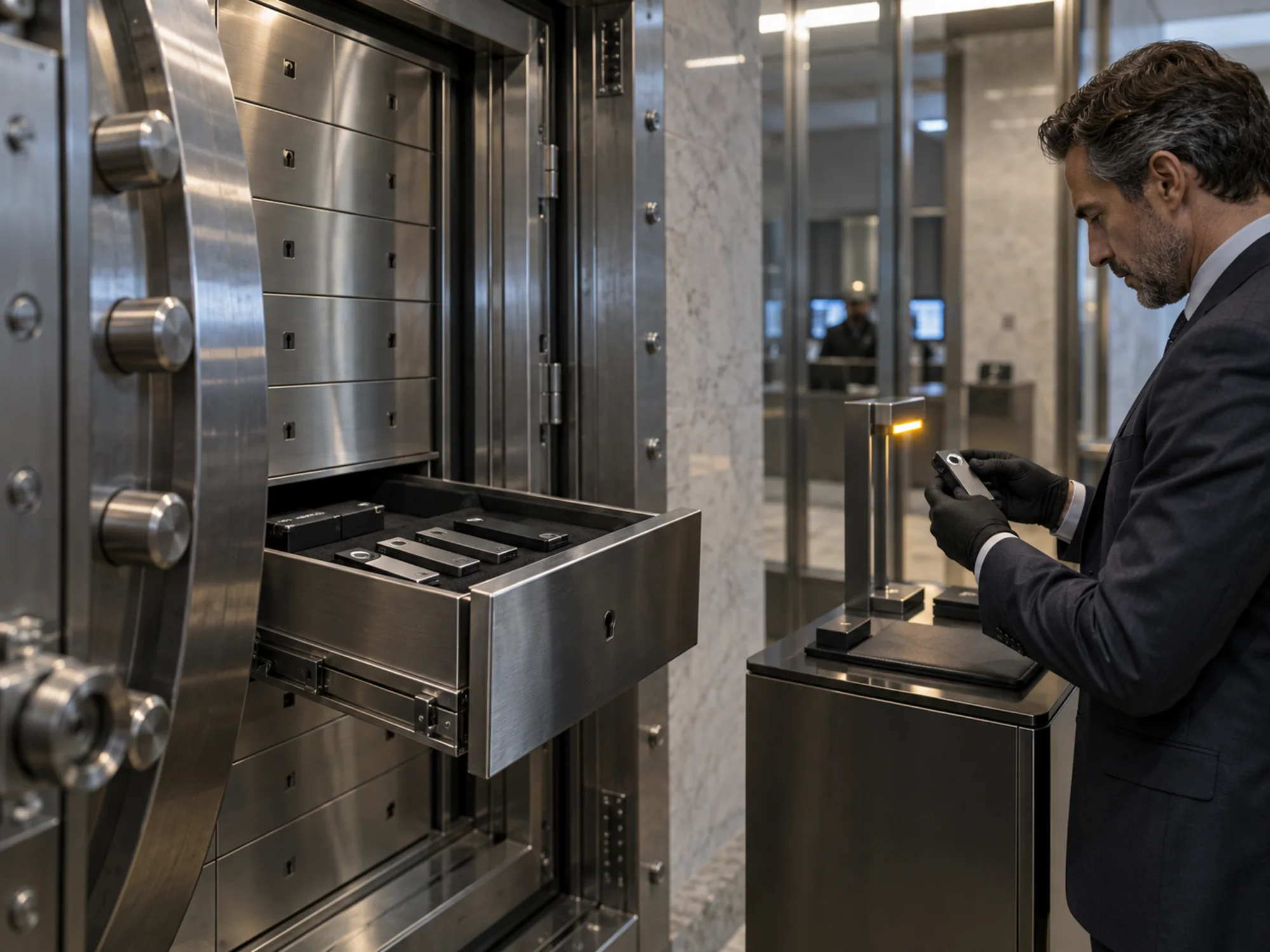
Custodians, ETF issuers and companies with large holdings keep most of their bitcoin in cold storage and only a small share in hot wallets for daily withdrawals. The keys sit in hardware security modules or signing devices in vaults, often split across several sites and several people.
How cold storage works
Every bitcoin output is locked to a public key, and only a signature from the matching private key can spend it. A hardware wallet or an air-gapped signing device creates and keeps that private key and shows the payment details on its own screen before it signs.
The backup is a seed phrase of 12 or 24 words, often stamped into steel and kept in a separate safe, from which every key of the wallet can be rebuilt. Anyone who finds the seed phrase controls the coins, so holders keep it apart from the device, as described under private key and seed phrase.
Institutional cold storage
A professional custodian keeps keys in hardware security modules or signing devices inside vaults, and a withdrawal needs the approval of several employees at different sites. Withdrawals from cold storage therefore take hours, while the hot wallet covers small daily amounts within set limits.
In the EU, Article 75 of MiCA requires a licensed custodian to keep client assets separate from its own, to report holdings to each client and to cover losses from incidents it is responsible for, up to the market value of the lost assets. External auditors check the records of every key ceremony and the access logs of the vaults.
Cold storage against an ETF
A spot bitcoin ETF also relies on cold storage, but the investor holds fund shares and the custodian holds the keys. The investor pays an annual fee and accepts the custodian as a counterparty, and in return needs no key management and can hold the position in a normal securities account.
Self custody in cold storage removes the counterparty and the fee, but puts the full operational risk on the holder. Family offices and companies often choose a multisig wallet as a middle path, where the holder keeps some keys and a service provider keeps one.
Upcoming bitcoin seminars and events
What is bitcoin cold storage?
Cold storage is any setup in which the private keys of a bitcoin wallet are created and kept offline. Hardware wallets, air-gapped computers and hardware security modules in vaults are the common forms.
Is cold storage safer than an exchange account?
Cold storage removes the risk that a hacked or insolvent exchange loses the coins, because only the holder controls the keys. It adds the risk of losing the keys or the backup, which is why holders test their recovery procedure before they move large amounts.
How do institutions store bitcoin safely?
Institutions use regulated custodians or their own vaults with multi-person approval, key shares at several sites and regular audits. Many combine a custodian for most of the holding with a small hot wallet for trading and settlement.
Bitcoin cold storage and Finance Loop
Finance Loop compares self custody, multisig and bank custody in its Bitcoin for Investors masterclass for portfolio managers, advisers and family offices. Dr. Mathias Linkerhand, a physicist and board member of the Bitcoin Bundesverband, teaches the course in Frankfurt, Munich and Berlin.
Finance Loop is a professional network and helps its members build skills and personal networks in these fields: Investment & Digital Assets, Payments & Digital Money, Digital Infrastructure & Sovereignty, and Risk & Compliance.