
Continuous Data Updates in Frankfurt
Continuous data updates keep a dataset current with changes in approved sources over time. An update process detects changed facts, prepares the affected records, and checks the result before further use. For teams in Frankfurt and Rhine-Main, this work matters when directories, reference records, or extracted knowledge must remain usable after initial collection.
The update schedule should follow the business need and the access available to each source. Some records can be refreshed at fixed intervals, while other changes can trigger processing directly. A useful operating agreement defines acceptable delay, review requirements, and responsibility when an update fails or introduces conflicting information.
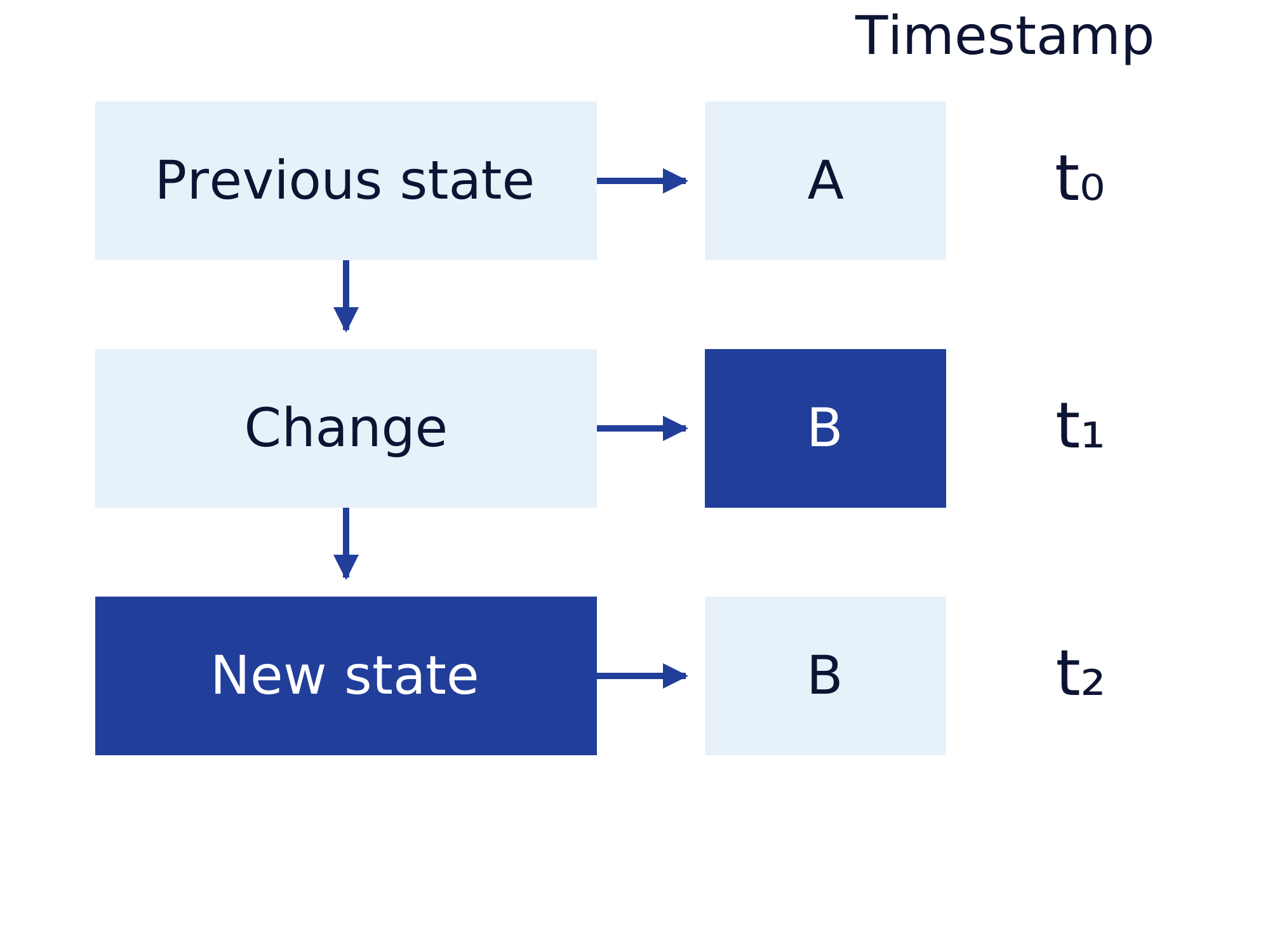
Choose how changes reach the dataset
Scheduled retrieval compares available source information with the last accepted version of a record. Where a database supports change capture, recorded events can identify inserts, updates, and deletions for downstream processing. The Debezium architecture documentation describes connectors that read database changes and pass those events to other systems.
The appropriate method depends on source access, record identifiers, and the required update frequency. A website, a supplied file, and a controlled database can require different collection methods. Record the source and retrieval time so reviewers can distinguish new evidence from an older accepted value.
Retrieve, validate, and release changed records
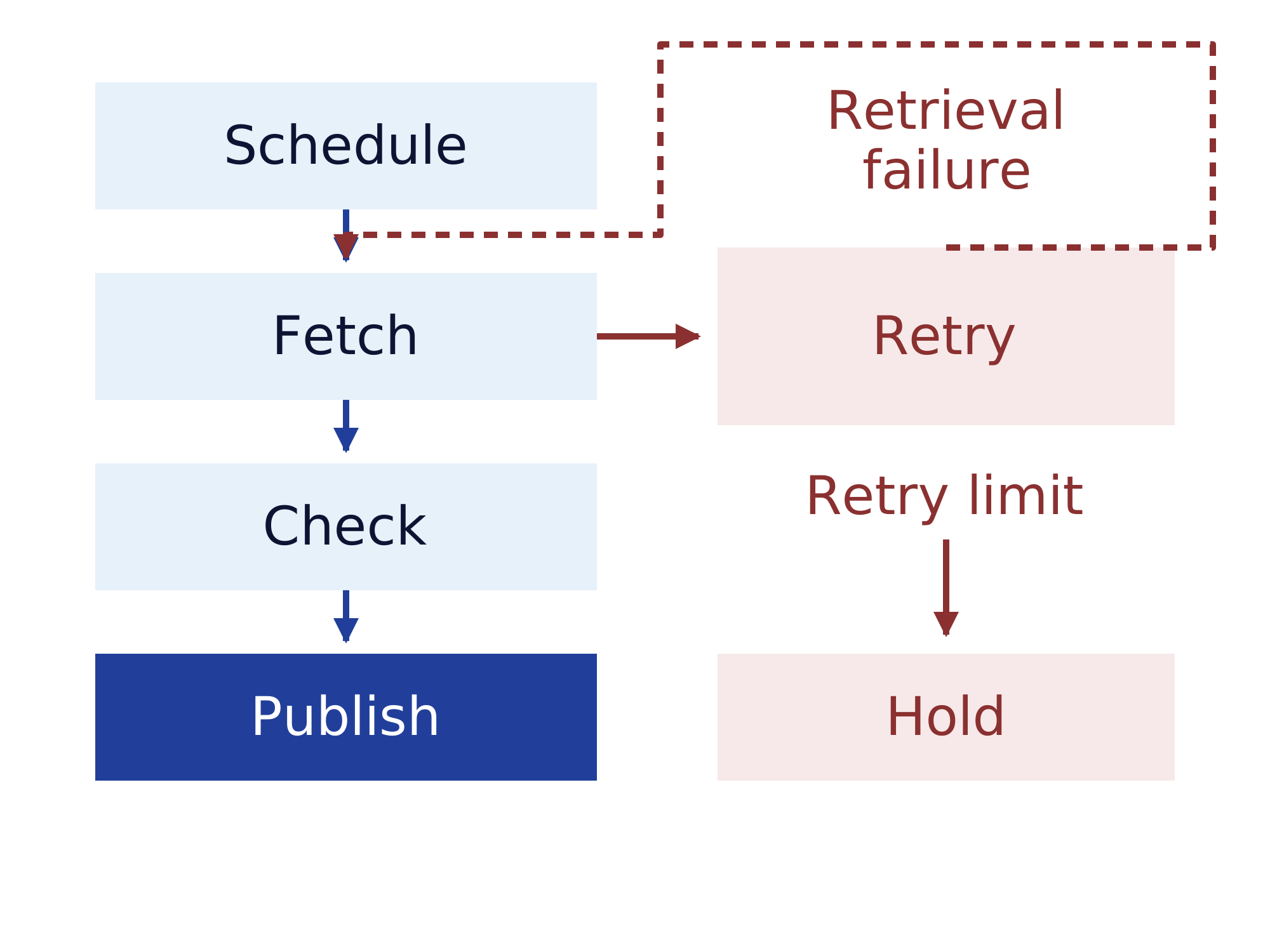
Compare the retrieved information with the accepted record before deciding which fields need updating. Check required fields and expected formats, then separate conflicting or incomplete changes for review. Release approved changes through the agreed destination interface while preserving enough history to investigate incorrect updates.
A missing source response is different from an explicit deletion in an accessible source. Define what happens when a source disappears, changes structure, or returns only part of the expected information. Keep the previous accepted record identifiable instead of silently treating a failed retrieval as a new business fact.
Acceptance checks for ongoing updates
Test a changed value, an unchanged record, a new entry, and an intentional deletion before handover. Include an interrupted job and a repeated run to check recovery and prevent unintended duplicate changes. Confirm that rejected updates remain visible and that successful processing records the accepted source version.
Agree who receives failure reports, which problems require human review, and when retrying should stop. The acceptance record should show whether the chosen schedule meets the agreed freshness requirement. A handover also needs an operating owner, access instructions, and a procedure for changing the schedule.
Operating arrangements in Frankfurt and Rhine-Main
Teams in Frankfurt and Rhine-Main should identify who owns each source and who uses the resulting records. Discuss permitted access, the consequences of stale information, and the times when corrections can be approved. Workshops can align business users and technical operators before a recurring service is commissioned.
The quotation should distinguish initial setup from recurring retrieval, monitoring, review, and maintenance. Changes to source structure can create work beyond the ordinary update cycle. Agree how additional sources, changed requirements, and unavailable access affect the operating scope before selecting a provider.
Keep regional contact and service records current
When a directory covers providers in Frankfurt, Wiesbaden and Darmstadt, a changed contact address and a changed service area should trigger different field updates. Preserve the earlier accepted value and the supporting source for each proposed change. Ask a reviewer to check a newly added city before downstream users receive that city as confirmed coverage. The operating agreement should also explain what happens to an existing regional record when the source becomes temporarily unavailable.
Gateflow as a provider
Gateflow is a Frankfurt IT company offering continuous updates within knowledge extraction and data quality projects. Gateflow refreshes affected records when approved source facts change and reports failed processing jobs. Customers determine how often reviews run and which changes require human approval before use in downstream systems.
The Gateflow data quality service treats ongoing updates as a separate operating scope from initial extraction. Discuss source access, review responsibilities, failure alerts, and the operating owner for your Frankfurt, Rhine-Main, or Germany-wide project.
Do continuous updates always happen in real time?
Continuous operation can use an agreed recurring schedule without updating every record immediately. The achievable delay depends on source availability, processing time, and any required approval. Ask for a measurable freshness requirement that distinguishes continuous operation from instant publication.
How should an update process handle deleted records?
An explicit deletion needs a defined destination action and a traceable decision. The correct action can depend on retention requirements and how downstream systems use the record. Distinguish confirmed deletion from temporary source failure, and test both situations before approving automatic changes.
Data expertise and Finance Loop
Finance Loop connects professionals working with emerging technologies and their practical use in finance. Gateflow participates in this exchange through Michael Wutzke, who teaches in the Claude Hacker House series, with the lineup varying by session.
Finance Loop is a professional network that advances the institutional use of emerging technologies in finance. Finance Loop helps members develop skills and professional contacts in these fields: Investment & Digital Assets, Payments & Digital Money, Digital Infrastructure & Sovereignty, and Risk & Compliance.
Contact Finance Loop to discuss relevant expertise, practical exchange, and connections for your data project.