
EUDI Wallet Payments
EUDI wallet payments use the European Digital Identity Wallet to authenticate a person confirming a payment. The wallet can present a payment credential and bind approval to transaction details, while banks and payment providers continue handling the transfer through existing payment processing systems.
For banks, payment providers and merchants, implementation depends on the selected payment method and the responsibilities of each participant. A useful payment flow connects wallet approval to the correct account or card, preserves evidence of consent and gives customers a clear alternative when authentication cannot finish.
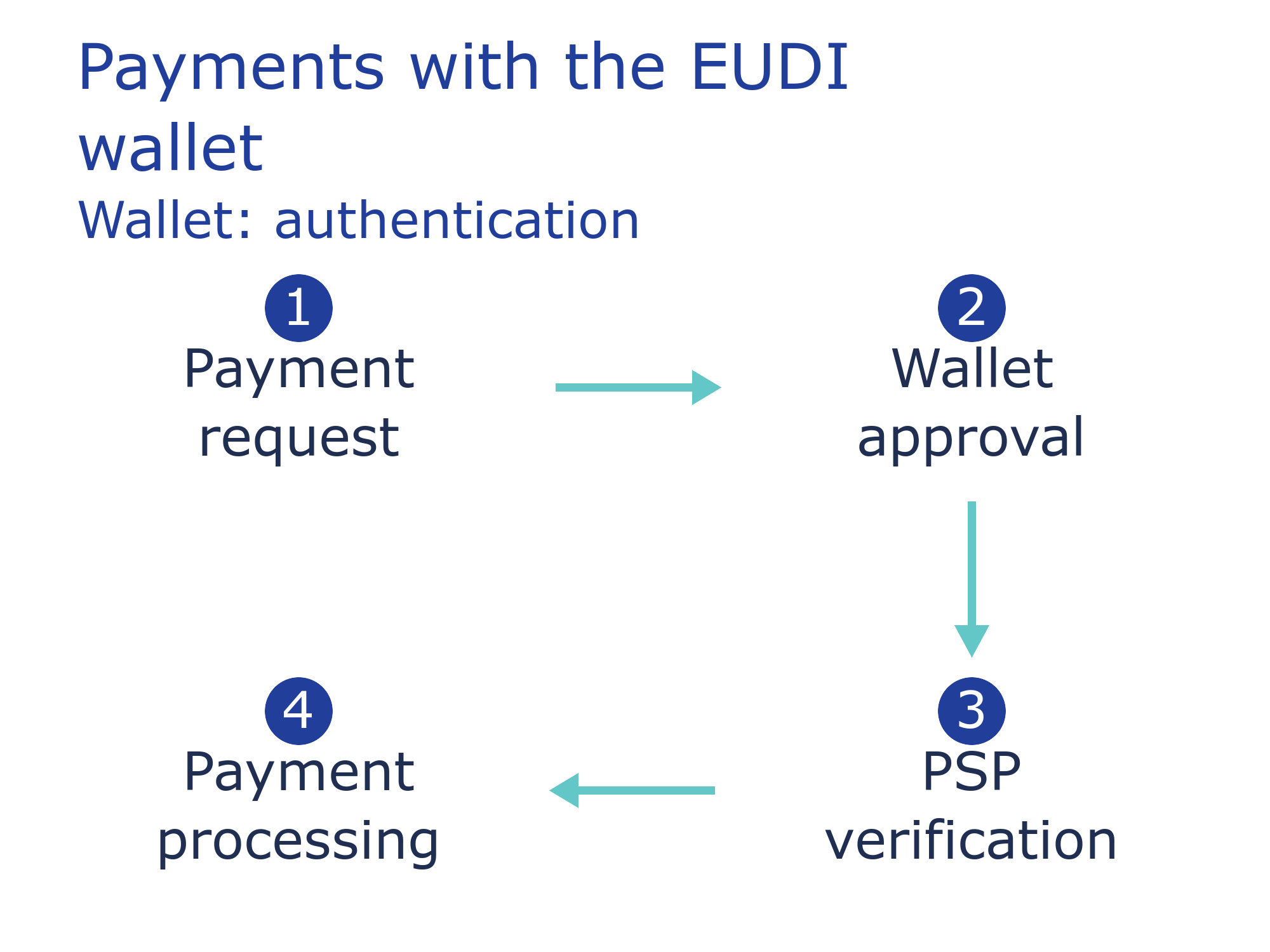
Where wallet authentication fits
The European Commission payment authentication manual describes online and in-store journeys using existing card and account-to-account infrastructure. These examples describe an intended use case, with implementation details continuing through technical specifications and pilots. Authentication can therefore change without replacing the payment network behind a purchase.
A merchant still needs an accepted payment instruction, a processing result and the appropriate reconciliation record. Wallet approval should enter that existing transaction lifecycle as evidence associated with one payment. The broader EUDI Wallet in finance also covers identity checks when opening accounts.
Strong customer authentication and dynamic linking
Strong customer authentication requires two independent factors from different categories, such as possession combined with knowledge or inherence. The payment design must establish how the wallet and its approval mechanism satisfy those requirements. Unlocking an identity credential alone does not demonstrate that the customer approved a particular payment.
The European Banking Authority explanation of dynamic linking requires the authentication code to correspond to the agreed amount and payee. Changing either must invalidate that code, so test cases should include modified amounts, substituted recipients and replayed responses.
Who issues, requests and processes the proof
The official payment authentication specification separates registration, authentication and dynamic linking. A payment provider issues an SCA attestation associating the wallet with the payer and, where applicable, an account or card. Payment-specific rulebooks define the relevant credential types and participant requirements.
Before procurement, identify which bank, payment service provider, acquirer or merchant requests the proof, which participant validates it and which provider executes the payment. Agree who investigates an expired credential, rejected request or disputed approval, because these responsibilities cross organizational boundaries during actual checkout failures.
Card payments and account-to-account transfers
A card transaction and a bank transfer can share a wallet authentication experience while following different processing arrangements. The authentication specification allows issuer-requested flows and requests from third parties, with additional communication through existing payment or open-banking networks. Supporting one arrangement does not establish compatibility with every account or card.
Payment teams should document supported instruments, enrollment requirements and the identifiers connecting wallet proof to the payment order. Acceptance tests should cover the full route from customer approval to provider confirmation. A successful browser return should never become the sole evidence that the underlying payment completed.
Consent, necessary attributes and operational evidence
The approval screen should make the recipient, amount and requested information understandable before the customer confirms. A payment involving an age-restricted purchase might also request an age credential, while an ordinary purchase needs a narrower information set. Each requested attribute should serve a defined purpose, keeping identification limited to necessary information.
For operations, associate the authentication outcome with the payment reference and the decision taken by the responsible provider. Define retention, access and dispute handling before collecting additional personal information. Identity orchestration in finance connects these decisions across verification providers and customer journeys.
Recovery, cancellation and alternative authentication
Customers may cancel a request, lose access to their wallet or encounter an expired credential during checkout. Each situation needs a recognizable outcome and a supported next action without creating duplicate payment instructions. The recovery path should establish whether authentication failed, processing remains pending or the payment was already completed.
The German EUDI Wallet FAQ confirms that wallet use remains voluntary and alternative procedures must remain available. Product teams should test the alternative authentication route with the same care as the wallet route, including interrupted sessions and assistance for customers replacing their wallet.
Acceptance deadlines and practical rollout
The Commission explanation of wallet acceptance distinguishes member-state provision by the end of 2026 from acceptance by obliged private providers by the end of 2027. The latter applies on user request where relevant strong authentication requirements apply, under Article 5f and its implementing-act timetable.
Germany currently plans its first state wallet version for early 2027, which focuses on identification and credential functions. Payment confirmation follows the phased rollout described in the national FAQ. Banks should therefore track legal acceptance duties, available national wallet capabilities and their own production readiness as separate planning decisions.
Questions about EUDI wallet payments
Does wallet authentication move the money?
Wallet authentication supplies evidence of approval while payment providers execute and process the transaction through the selected payment arrangement.
Can one integration cover every European wallet payment?
Compatibility depends on certified wallet capabilities, payment credential rulebooks and the participating providers, so each supported arrangement needs explicit testing.
Payments events across Europe
The calendar needs JavaScript to display upcoming events on this page.
Payment identity and Finance Loop
Finance Loop connects professionals across Europe working on emerging technologies in finance, including payment authentication and digital identity. Finance Loop supports exchange between companies assessing wallet integration, operational responsibilities and practical customer journeys across countries.
Discuss EUDI wallet payment authentication
Contact Finance Loop to discuss your payment identity priorities and connect with relevant professionals across the European financial industry.