
IT infrastructure support services in Frankfurt
IT infrastructure support is the ongoing care of the servers, hosting systems and connections that business applications depend on. Companies use external support when the existing environment needs a named technical contact who coordinates maintenance and follows unresolved operational issues through to an agreed outcome.
A support agreement identifies the systems covered, the permitted access and the work included within defined service hours. For businesses in Frankfurt and Rhine-Main, the agreement should also distinguish work handled remotely from tasks requiring site access, with clear responsibilities for external hosting and software suppliers.

System inventory and operating responsibilities
Infrastructure support starts with an inventory connecting each system to a business use and a responsible contact. Record where the system runs, who controls administrative access and which supplier handles hardware or hosting failures. A useful handover also identifies undocumented changes and unresolved faults, so the incoming support team can distinguish an existing problem from a new incident.
Server maintenance and verified updates
Server maintenance needs a repeatable process for selecting updates and checking the result after installation. NIST patch-management guidance treats identifying, prioritizing, installing and verifying updates as preventive maintenance. Buyers should agree who approves disruptive changes, which application checks follow a restart and how failed changes are handled before the maintenance window begins.
Monitoring, incident response and confirmation
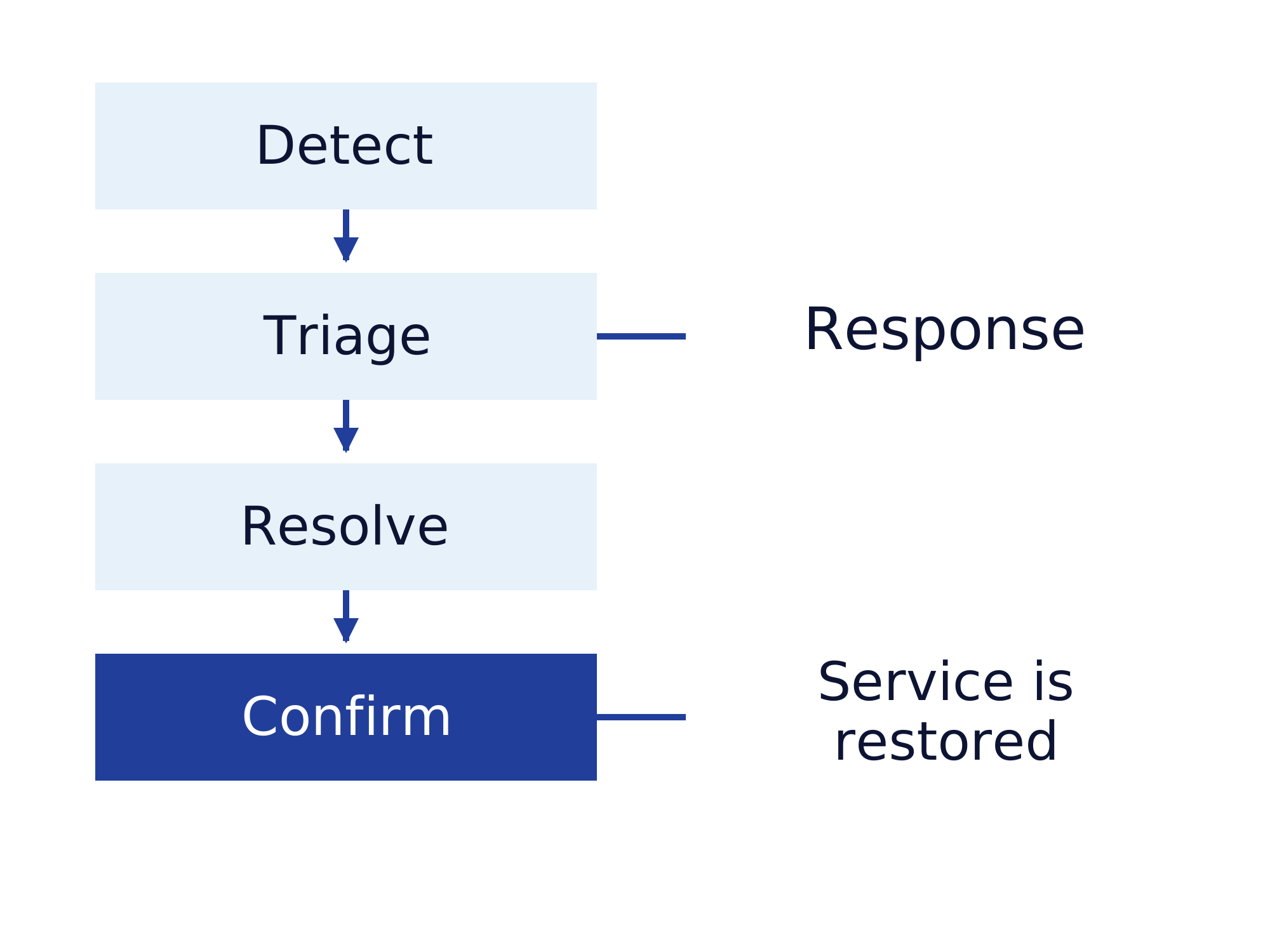
Infrastructure monitoring can report a failed check, while incident support determines the business impact and the next action. The support process needs an owner who records the fault, assigns investigation and keeps the affected team informed. A response target measures when agreed support activity begins; a restoration target concerns when the affected service works again.
Incident records should show what was changed and how the result was confirmed. Emory University documents incident responsibilities that include escalation, troubleshooting records and confirmation with users. When a hosting or software supplier must intervene, the contract should identify who maintains contact until the incident reaches an agreed conclusion.
Checking backups and testing recovery
A backup check and a recovery test answer different operational questions. A completed backup job records that the scheduled copying process ran; a recovery test checks whether selected data or services can actually be restored. NIST contingency-planning guidance includes recovery priorities and testing, which buyers can use to define the required checks, evidence and responsible contacts.
What belongs in an IT maintenance contract?
An IT maintenance contract should name the covered systems, working hours and rules for accepting a support request. Clarify whether monitoring, updates, backup checks and supplier coordination are included, and specify how additional work is approved. The handover record should remain available when responsibilities change, including current access arrangements and outstanding actions.
Remote support and site access in Rhine-Main
Infrastructure support for a Frankfurt or Rhine-Main location needs a practical division between remote work and physical intervention. Agree the approved access method and the contact who can authorize a visit before an incident occurs. Site opening hours, escort requirements and replacement equipment can affect how quickly an on-site task can begin.
IT support in Frankfurt and Wiesbaden
A business comparing IT support in Frankfurt or Wiesbaden should describe the affected service and the people who depend on it. An application outage affecting several colleagues needs a different initial assessment from a single workstation problem. Agree how the first report reaches the support contact and which information the contact needs to arrange remote investigation or an approved visit.
IT support for company locations in Berlin and Munich
For a business arranging IT support for Berlin or Munich locations, a shared contract should identify the systems and local contacts covered at each office. Confirm how a remote investigation is handed over when a hardware fault requires someone on site, including the approval of travel or a separate local assignment. Keep those arrangements in the operating record so that an absent office contact does not leave the next action undefined.
Gateflow as an infrastructure support provider
Gateflow is a Frankfurt IT company providing support for defined existing environments. Gateflow agrees the systems, maintenance and monitoring scope, support windows and escalation path for each assignment. The infrastructure support service includes an inventory and records of changes, unresolved issues and supplier handoffs. Projects can cover Germany, with remote or on-site delivery agreed for the assignment.
Does infrastructure support include round-the-clock coverage?
Infrastructure support covers the hours and response commitments stated in the agreement. Continuous monitoring can run outside staffed hours without guaranteeing immediate human intervention. Ask who receives an overnight alert and whether investigation, escalation and physical attendance are covered by the same agreement.
What determines the cost of server support?
Server support costs depend on the environment, included tasks and agreed availability. Compare proposals against the same system inventory and distinguish recurring maintenance from separately approved changes. Ask how supplier work, travel and exceptional incidents are charged before comparing the total expected cost of the service.
Infrastructure support and Finance Loop
Finance Loop connects professionals working with emerging technologies and the infrastructure supporting their applications. Finance Loop brings practitioners together through formats such as the Claude Hacker House, where the teaching lineup can include Michael Wutzke from Gateflow.
Finance Loop is a professional network advancing the institutional use of emerging technologies in finance. Finance Loop helps members develop skills and professional contacts in these fields: Investment & Digital Assets, Payments & Digital Money, Digital Infrastructure & Sovereignty, and Risk & Compliance.