
Financial Infrastructure
Financial infrastructure is the set of systems, rules and connections that lets money and financial assets move between people and institutions. Payments, securities settlement and credit information belong to this field. Financial infrastructure turns an instruction to pay or invest into records that the parties can rely on.
A useful distinction is between shared market infrastructure and the technology inside an individual bank. A payment system connects institutions; a bank's core banking system records its own customer accounts. Networks, data centers and software connect these layers, but each layer has a different job.
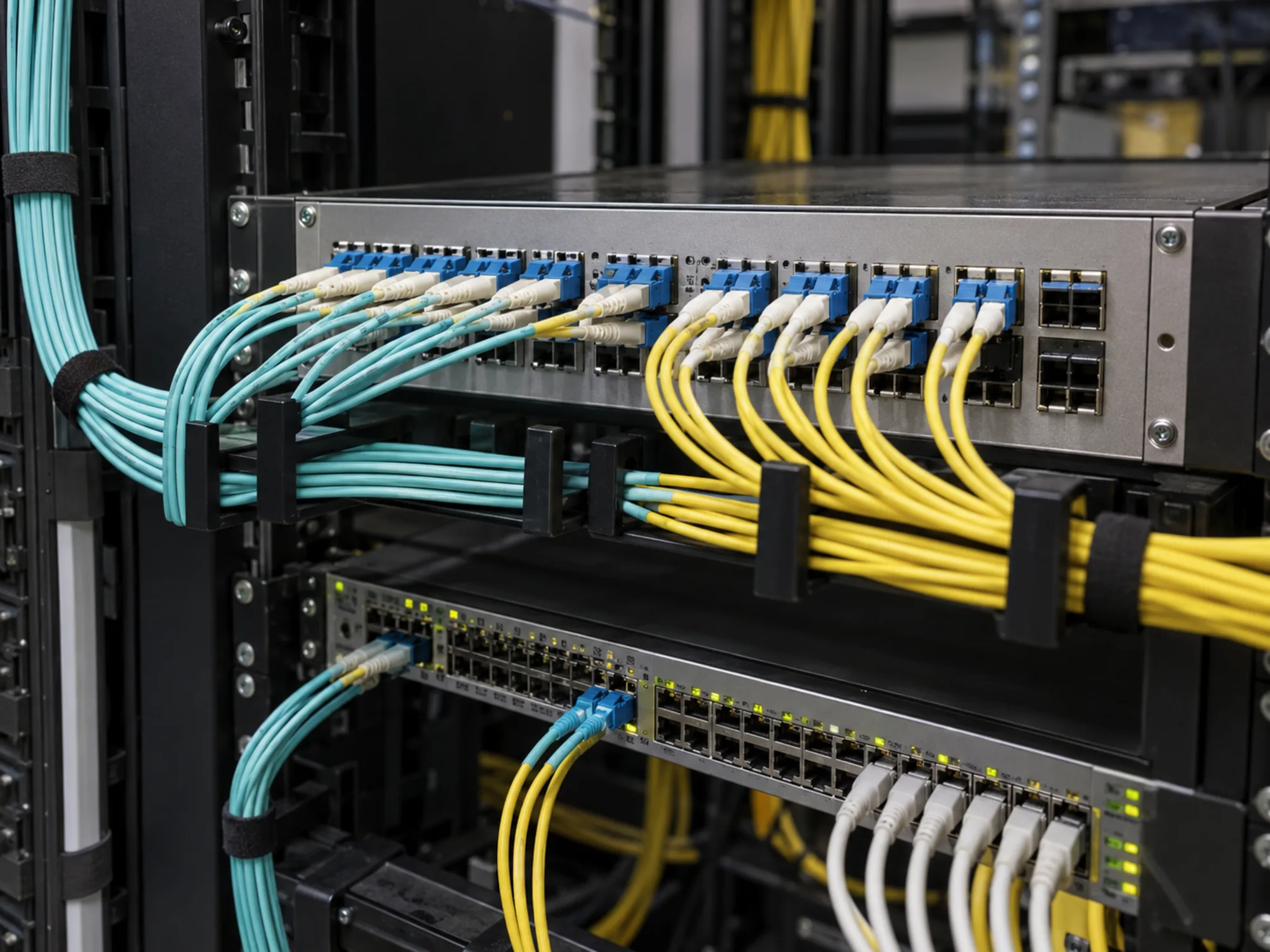
From a payment instruction to settlement
For a business sending a payment or an investor buying a security, the result matters more than the technology: the correct amount reaches the correct account, assets change hands as agreed, and the transaction can be checked afterward. Financial infrastructure provides the operating arrangements behind those outcomes.
A payment begins with an instruction. The customer's bank checks the account, prepares the message and routes the payment through an agreed channel. The receiving institution then needs confirmation that the payment can be credited. That sequence connects customer-facing services with interbank processing; a successful screen in a banking app is only one part of the process.
Clearing and settlement describe different work. Clearing establishes the obligations between participants, sometimes combining many transactions into net amounts. Settlement completes the transfer of funds or assets. A message carries information about a transfer; the message alone does not move the settlement asset. Payment and securities settlement systems, credit infrastructure and cross-border payments are all parts of the broader financial infrastructure field.
Credit information is another part of financial infrastructure. Records of borrowing and repayment provide additional information for lenders assessing a credit application. Payment processing and credit reporting serve different decisions, so improving one does not automatically improve the other.
The systems behind securities transactions
Buying a security creates obligations for both sides: the seller must deliver the security and the buyer must pay. A central counterparty can stand between trading parties and manage their exposure. A central securities depository keeps securities records and supports their transfer. Trade repositories collect transaction records for reporting and oversight. These functions should not be confused with the exchange or trading venue where a price is agreed.
Financial market infrastructure includes payment systems, central securities depositories, securities settlement systems, central counterparties and trade repositories. The international PFMI standards cover these categories. Germany's post-trade institutions include Eurex Clearing and Clearstream, whose roles differ even when both support the same trade.
Europe's TARGET Services
The Eurosystem operates several services for different financial flows. T2 settles payments, T2S settles securities, TIPS settles instant payments and ECMS manages collateral for Eurosystem credit operations. TARGET Services use central bank money for settlement. TIPS enables real-time transfers around the clock; this does not mean every TARGET service has the same operating hours.
These services connect institutions across Europe. A securities transaction can require both a securities movement and a cash movement, while collateral management supports access to central bank credit. A bank connecting to these services must coordinate external settlement records with its internal books. The public settlement infrastructure does not replace a bank's customer-account software.
Where core banking and cloud fit
A core banking system records accounts, deposits, loans and postings inside a bank. Payment interfaces send instructions out and bring confirmations back. Reconciliation compares those external records with the internal ledger. This is why a bank can modernize its account platform while continuing to use established payment and settlement networks.
The hosting layer is another choice. A bank can run workloads in its own facilities or buy cloud services. Data access, operational control and the ability to move workloads need separate assessment from the choice of payment rail. Sovereign cloud, AI infrastructure and core banking modernization therefore have their own technical questions; none describes the whole financial infrastructure.
Connecting new technology to established systems
New infrastructure has to work with existing accounts, messages and controls. A tokenized asset still needs an agreed way to pay for a purchase, reconcile holdings and handle exceptions. The Eurosystem's Pontes solution links market DLT platforms with TARGET Services for central bank money settlement. The bridge connects different technical environments; a distributed ledger does not by itself replace every step of securities processing.
For an infrastructure project, practical questions start with the transaction: which record confirms completion, who resolves a mismatch, and what happens when a participant or connection is unavailable? Testing the whole transaction path gives a different picture from testing one application. Recovery procedures also need to account for messages already sent and transactions that completed before an interruption.
Participants and systems depend on one another. A delay in one part can affect the funds available elsewhere, even when another application is running normally. Interdependencies between infrastructure systems and their participants therefore belong in operational planning alongside the availability of individual services.
Financial Infrastructure and Finance Loop
Finance Loop connects professionals working on bank technology, payments and digital assets. Financial infrastructure brings these fields together: developers need to understand settlement, payment teams depend on reliable IT, and digital-asset projects connect new ledgers with existing financial systems.
Finance Loop is a professional network with the goal of driving the adoption of emerging technologies in finance. Finance Loop helps its members build skills and personal networks in Investment & Digital Assets, Payments & Digital Money, Digital Infrastructure & Sovereignty, and Risk & Compliance.