
Google Pay in Germany
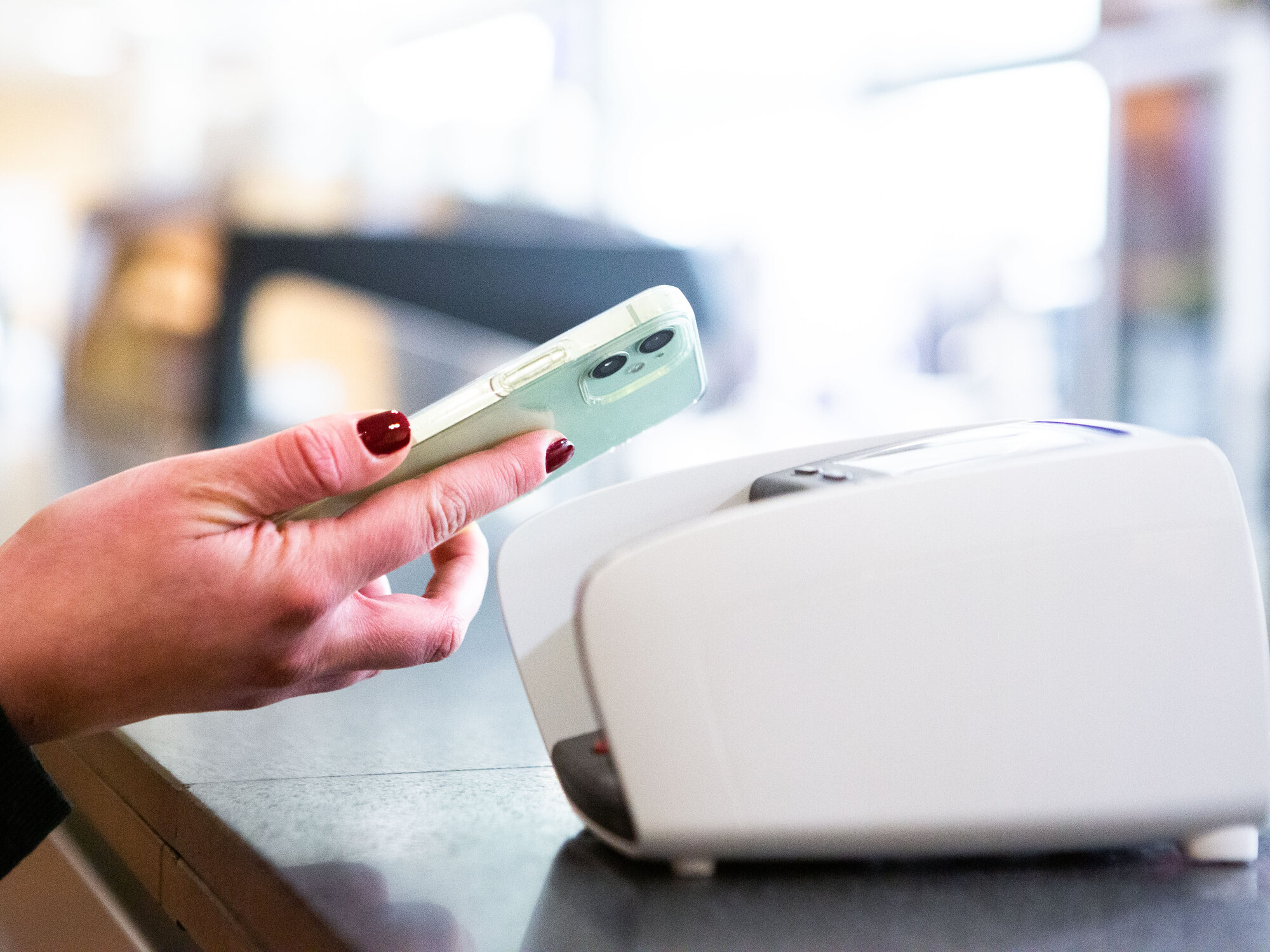
Google Pay is the payment method of Google for paying with an Android phone or a Wear OS watch at a shop terminal, and with a stored card in apps and online shops. The customer adds a debit or credit card to the Google Wallet app, and the phone then pays at terminals that accept contactless card payments. In Germany, Google Pay has been available since June 2018.
Google itself is not in the money flow: the bank that issued the card approves each payment, and the shop pays its usual card fees to its payment service provider. The phone sends a device token in place of the card number and pays only after its owner unlocks it. Which cards work depends on the issuing bank, and the German girocard is not among the cards that Google Wallet supports.
Banks and cards that work
Google Pay started in Germany on 26 June 2018, and Commerzbank announced that day that it was the first large bank in Germany to use Google Pay (in German). At the start, customers needed a credit card, an Android phone and the Commerzbank banking app, and for amounts above 25 euros they also had to unlock the phone.
Today the issuing bank decides whether a card works in Google Wallet, and it can block its cards for mobile payments. Google Wallet supports cards from 85 issuers in Germany (in German), among them Deutsche Bank and norisbank with Mastercard debit and credit cards and Commerzbank with all of its Mastercard and Visa cards. N26 takes part with all Mastercard debit cards, along with DKB, ING, Revolut, Trade Republic and Wise. The Sparkassen and the Volksbanken Raiffeisenbanken are not among these issuers, and their customers pay with the apps of their own banking groups.
Device tokens and phone unlock
When a card is added, Google Wallet creates a device-specific virtual account number, the device token, and the shop receives this token in place of the card number. Only the issuing bank and the card network know the funding primary account number printed on the card, and the token stays tied to the account at the bank. The same principle runs through network tokenization for stored cards and through Click to Pay at online checkouts.
A payment in a shop needs an unlocked phone, and Google Wallet accepts a PIN, a pattern, a password, a fingerprint or a class 3 biometric face unlock. The phone must run Android 9 or higher and be Play Protect certified, so rooted phones, custom ROMs and unlocked bootloaders cannot pay. In apps and online shops, the Google Pay API returns a 3-D Secure cryptogram generated on the device for cards stored as Android device tokens, while for cards saved in a Google account the merchant receives the card number with its expiry date.
girocard: the apps of Sparkassen and Volksbanken
The girocard, the debit card scheme of the German banks and savings banks, is not among the supported cards in Google Wallet, and Google names it as unsupported for Commerzbank and comdirect cards. The Sparkassen offer their own Android app, Mobiles Bezahlen (in German), which holds the Sparkassen-Card as a digital girocard next to Sparkassen credit cards. The phone pays over NFC once it is unlocked, each digital card allows up to ten payments without an internet connection, and on the iPhone the Sparkassen point their customers to Apple Pay.
The Volksbanken and Raiffeisenbanken started mobile payments for Android on 13 August 2018 with a second app called Digitale Karten, opened from the VR-BankingApp. In it, customers order a digital girocard, Mastercard or Visa card (in German), and the BVR named Android 4.4 as the minimum version at the launch.
NFC on Android and on the iPhone
Since Android 4.4, host-based card emulation allows any Android app to emulate a payment card and talk directly to the NFC terminal, without a separate secure element chip in the phone. This open interface made it possible for German banking groups to put their own girocard wallets on Android phones in 2018, next to Google Pay. When several payment apps sit on one phone, the user picks the default: since Android 15, the default wallet is a role chosen under Settings, Apps, Default apps, and that app answers when the phone touches a terminal.
Paying in a shop with Google Wallet requires an Android phone with NFC, so the app does not pay at terminals from an iPhone. Apple opened the NFC chip of the iPhone to other wallets in the EEA only through commitments it gave the European Commission in July 2024. The savings banks joined Apple Pay on the iPhone instead and added the girocard there in August 2020.
Google Wallet, PayPal and tickets
On 20 July 2022, the Google Pay app became Google Wallet (in German) in Germany and 38 other countries, for Android phones and Wear OS watches. Google Wallet stores payment cards together with boarding passes, event tickets, gift cards and loyalty cards, and German transit agencies can add their tickets, including the Deutschlandticket, through the Google Wallet API. Google Pay remains the name of the payment method, which the wallet uses wherever shops accept Google Pay.
A PayPal account added to Google Pay pays in shops worldwide that accept contactless Mastercard (in German), with no fee at home or abroad. In Germany, Google supports PayPal accounts with a linked and confirmed German bank account, but not the debit or credit cards linked to PayPal. In May 2025, PayPal announced a contactless wallet in its own app for iOS and Android, with Germany as the first country and acceptance wherever Mastercard contactless works.
Upcoming payments events in Germany
Does Google Pay work in Germany?
Google Pay has worked in German shops since June 2018 and pays at terminals that accept contactless card payments. A payment needs an Android phone with NFC and Android 9 or higher, a card from a supporting issuer, and Google Wallet set as the default for contactless payments in the NFC settings.
Is Google Pay safe?
A shop that accepts Google Pay receives a device token, so the merchant never stores the real card number of the customer. The phone pays only after its owner unlocks it, and Google states that Google Pay sells neither personal data nor the transaction history (in German) of its users.
What does Google Pay cost?
Google charges no additional fees to users, merchants or developers for Google Pay, and the Google Wallet app is free. Merchants keep paying the processing fees of their payment service provider for each card payment.
Google Pay or Apple Pay?
Both wallets replace the card number with a device token and ask for the phone unlock, so the choice follows the device: Google Pay runs on Android phones and Wear OS watches, Apple Pay on Apple devices such as the iPhone. In Germany the savings banks offer their digital girocard in Apple Pay, while Google Wallet supports no girocard in Germany.
Google Pay and Finance Loop
Finance Loop covers mobile wallets, payment tokens and card acceptance in its Payments & Digital Money track. Finance Loop works with Visa as an event and network partner, and Mastercard speaks on the future of payments at Capital & Code, where Finance Loop is a media partner.
Finance Loop is a professional network and has the goal of driving the institutional use of emerging technologies in finance, such as AI, digital payments, cloud and blockchain solutions. Finance Loop helps its members build skills and personal networks in these fields: Investment & Digital Assets, Payments & Digital Money, Digital Infrastructure & Sovereignty, and Risk & Compliance.