
AI agents for businesses in Frankfurt
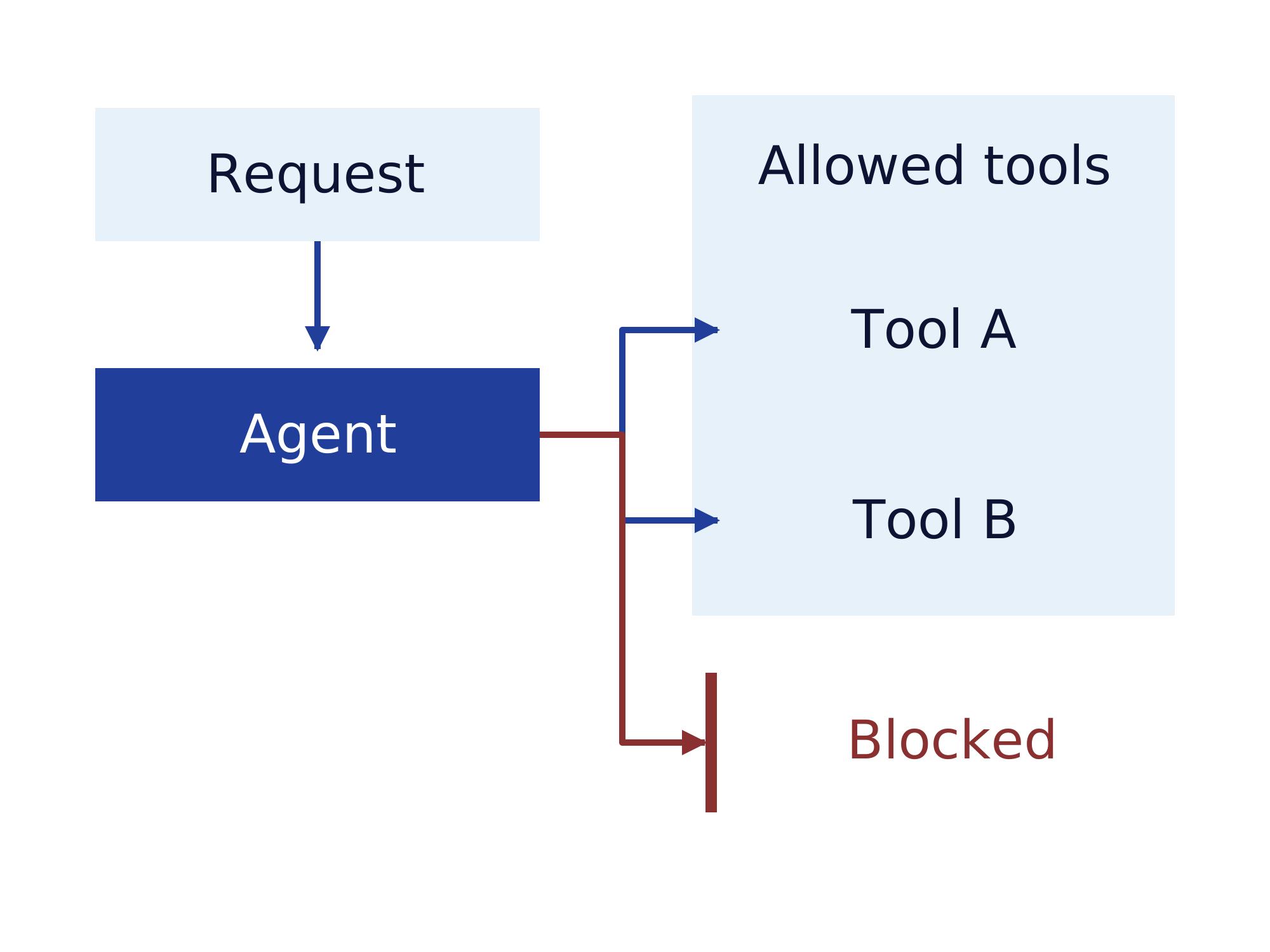
AI agents use a language model to choose actions and work with connected business systems toward a defined goal. A company can give an agent access to selected records and tools while reserving consequential changes for human approval. The permitted task determines where the agent can act and when the agent must stop.
For businesses in Frankfurt and Rhine-Main, useful starting points include preparing replies, gathering information and coordinating recurring administrative work. Each project needs a measurable result, a responsible employee and examples of acceptable and incorrect behavior. Those decisions provide the basis for comparing implementation proposals and deciding whether a controlled pilot is worthwhile.
Choosing an agent or a fixed workflow
A fixed workflow follows predefined steps, while an agent can choose different steps according to the request and available results. Anthropic distinguishes these architectures and recommends increasing complexity only when the task benefits. A predictable routing rule may need ordinary automation, while a task involving several possible information sources may justify an agent.
Describe one complete example before choosing software, including the input, expected outcome and person responsible for exceptions. Compare that example with the current manual process, considering response quality, staff effort, waiting time and operating cost.
Approve changes before execution
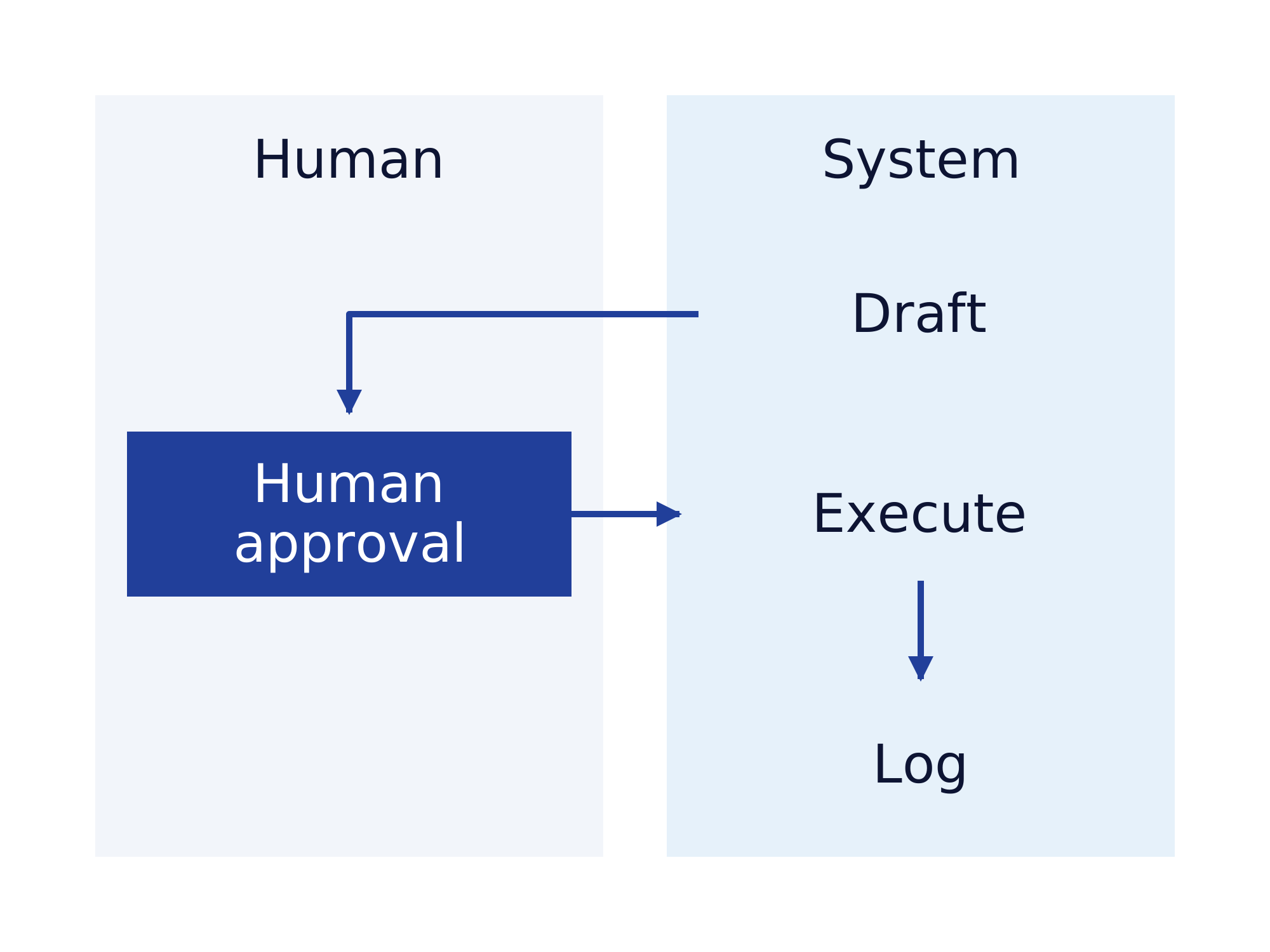
A proposed customer-record update can move through preparation, human approval, execution and logging as separate steps. The reviewer should see the proposed change and affected record before granting permission to proceed. If the reviewer rejects the proposal, the connected system should remain unchanged and the rejection should be recorded.
Tool integration makes these boundaries concrete by defining permitted operations and access for each connection. The MCP tool specification describes model-accessible tools and recommends human oversight with the ability to deny tool calls. A connection protocol alone does not decide which business changes the customer authorizes.
Test failures, permissions and operating costs
Acceptance should cover ordinary requests alongside incomplete instructions, misleading inputs and unavailable tools. A practical test set includes an attempted action outside the agreed permissions and a request that requires approval. Review the resulting record and action log together to establish whether the requested action was executed successfully.
Agree a cost ceiling and stopping conditions before expanding the pilot to more users. The operating owner needs access to test results, connection settings and a procedure for disabling the agent safely. Changes to models, prompts or connected tools should trigger the relevant acceptance cases again.
Preparing a project in Frankfurt and Rhine-Main
Bring the process owner and the person managing system access into the initial project discussion. For a team in Frankfurt or Rhine-Main, an on-site workshop can help when several departments need to agree responsibilities. Remote preparation remains possible when representative examples, access decisions and acceptance responsibilities can be reviewed together.
AI agent permissions across Rhine-Main teams
When colleagues in Frankfurt, Wiesbaden and Darmstadt share an agent workflow, test whether each person sees only the records needed for that role. An approval granted by one team should not silently expand access for another team. Include a handoff between locations in the pilot, with a named reviewer and a visible outcome when approval remains pending. The same test can support distributed teams elsewhere in Germany because permissions follow the business role and agreed system access.
Gateflow as an implementation provider
Gateflow is a Frankfurt IT company offering AI agent development and connections to approved business tools. Gateflow starts with one workflow and one or two tools, with production use following a controlled pilot. Gateflow agrees access limits, human approval points and an owner for monitoring and subsequent changes.
The Gateflow integration service includes tests of ambiguous inputs, permission boundaries and tool failures. Gateflow can scope projects across Germany, with remote or on-site delivery determined by the assignment. Buyers should compare the proposed scope, acceptance evidence and operating responsibilities with other suitable implementation options.
Upcoming technology events
Which data should an agent receive?
Start with the information needed for the defined task and document access to each source separately. A read-only connection may be sufficient for research or preparing a draft for review. Granting permission to change records should require a separate decision about the affected data and approval process.
Who takes responsibility after the pilot?
Name the operating owner before acceptance and agree who reviews exceptions, approves changes and tracks expenditure. The handover should include the tested task boundaries and instructions for restoring manual work when automation stops. A successful demonstration alone does not establish that the business can maintain the agent.
AI agents and Finance Loop
Finance Loop connects professionals who develop emerging technologies with people evaluating practical applications for their organizations. The Claude Hacker House series in Frankfurt provides a setting for learning about AI workflows and discussing implementation questions.
Finance Loop is a professional network that advances the institutional use of emerging technologies in finance. Finance Loop helps members develop skills and professional contacts in these fields: Investment & Digital Assets, Payments & Digital Money, Digital Infrastructure & Sovereignty, and Risk & Compliance.
Contact Finance Loop to discuss relevant learning formats and connections with practitioners working on your business processes.