
Capital markets Frankfurt
Capital markets in Frankfurt bring together companies and governments seeking financing with investors who buy shares and bonds. Banks arrange securities issues and investors trade existing holdings on organized markets. Deutsche Börse operates the Frankfurt Stock Exchange, while banking and investment teams work in the city.
Capital markets give issuers a route to long-term funding and investors a way to hold or sell securities. The Frankfurt Stock Exchange and Xetra support securities trading, while Eurex supports derivatives trading and related services complete transactions. Securities issues and trading are subject to EU disclosure and market rules, which set responsibilities for the firms involved.
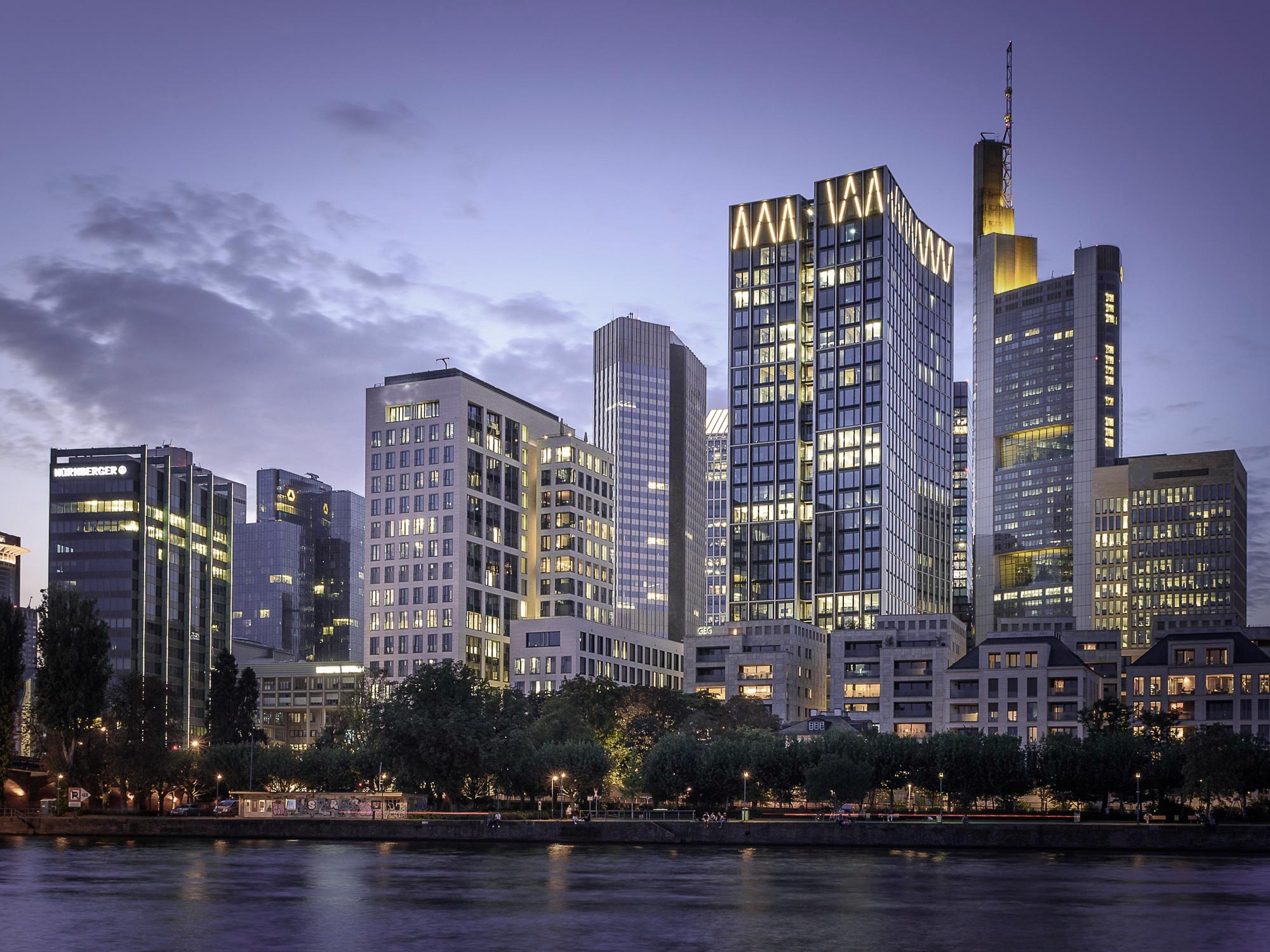
Raising capital through shares and bonds
Companies and governments raise long-term funding on the primary capital market by issuing shares and bonds. Investors trade existing securities with one another on the secondary market. A company that needs funding for a decade can borrow from a bank or sell securities to the public; the second route runs through the capital market. Inside a bank, equity capital markets (ECM) teams arrange share issues such as an IPO, and debt capital markets (DCM) teams arrange bond issues.
Frankfurt is where this work concentrates in Germany because the country's main exchange sits here. The Deutsche Börse Group, headquartered in Frankfurt, operates the Frankfurt Stock Exchange (Frankfurter Wertpapierbörse) as an entity under public law, with its own Trading Surveillance Office monitoring conduct on the exchange and the Exchange Supervisory Authority of Hesse overseeing it at state level.
Xetra, Eurex and the banks that trade on them
Xetra, the electronic trading system Deutsche Börse introduced in 1997, carries the large majority of share trading at German exchanges and sets the prices used to calculate the DAX, the index of Germany's largest listed companies. Eurex, the group's derivatives exchange, is one of the largest in Europe for futures and options, and Clearstream, its post-trade unit, settles and safekeeps the securities that trade on both.
Deutsche Bank, one of Germany's two largest private banks, and Commerzbank, the other, run capital markets desks from their Frankfurt head offices, arranging share and bond issues for corporate clients. DWS Group, one of the city's largest fund managers, and Union Investment, the other, sit on the buy side of the same market, deciding which of those issues to invest in on behalf of savers.
The EU law behind an issue and a trade
An issuer that offers securities to the public in the EU needs a prospectus under the Prospectus Regulation, which took effect in 2019 and sets what the document must disclose. Trading itself runs under MiFID II, which defines a trading venue as a regulated market, a multilateral trading facility or an organized trading facility, and sets conduct rules for the firms trading on it. BaFin investigates suspected insider trading and market manipulation at the federal level, working alongside the state-level exchange supervisors.
The European Commission has pushed to deepen these markets since 2015 under the capital markets union, widened in 2025 into the savings and investments union. The European Commission estimates that about 70 percent of household savings in the EU, worth an estimated EUR 10 trillion, sit in bank deposits, not in capital markets, which the plan aims to change by making it easier for savers to invest directly.
Upcoming finance events in Frankfurt
Capital markets and Finance Loop
Finance Loop is the meeting place in Frankfurt for equity and debt capital markets teams, exchange staff and the fintechs building on top of them. Finance Loop connects the finance, IT and AI sectors in collaboration with TechQuartier. Finance Loop also collaborates with Frankfurt Main Finance, which it has been a member of since October 2024.
Finance Loop was a partner of Frankfurt Digital Finance at the Gesellschaftshaus Palmengarten, where capital markets and digital assets shared the agenda. Learn about asset management in Frankfurt, or explore the broader subject of finance in Frankfurt.
What does capital markets mean at a bank?
At a bank, capital markets is the division that arranges share and bond issues for corporate and government clients and trades those securities afterward. Equity capital markets covers share issues, debt capital markets covers bonds, and both sit apart from retail banking, which serves individual customers instead of issuers and institutional investors.
What is the capital markets union?
The capital markets union is the plan of the European Commission to join the national capital markets of the EU member states into a single market for capital. Adopted first in 2015 and widened in 2025 into the savings and investments union, it aims to give EU savers, most of whose money sits in low-yielding bank deposits, easier access to capital markets investment. Frankfurt, as the seat of Germany's main exchange, is one of the markets the plan aims to connect more closely with the rest of the EU.
Capital markets and Finance Loop
Frankfurt hosts Germany's main stock exchange, its central banks and the capital markets desks of the country's largest banks, and Finance Loop brings the people who work there together with asset managers, fintech founders and regulators at events in the city and in Munich, Berlin and Hamburg. Learn more about Finance Loop and the work of the network.
Finance Loop is a professional network supporting the institutional use of emerging technologies in finance. Finance Loop helps its members build skills and personal networks in the field of Investment & Digital Assets, Payments & Digital Money, Digital Infrastructure & Sovereignty, and Risk & Compliance.