
Dynamic currency conversion
Dynamic currency conversion (DCC) lets a cardholder choose to pay in the currency of their card account at a foreign checkout or cash machine. The merchant or ATM provider arranges the conversion and shows a converted amount before approval. The alternative is to pay in the local currency and have the card provider handle the conversion.
DCC makes a purchase or withdrawal amount visible in the cardholder's familiar currency before the transaction is completed. The offered exchange rate can include a markup, so the converted amount needs to be considered alongside any other charges. Understanding who performs the conversion helps travelers compare the available payment options.
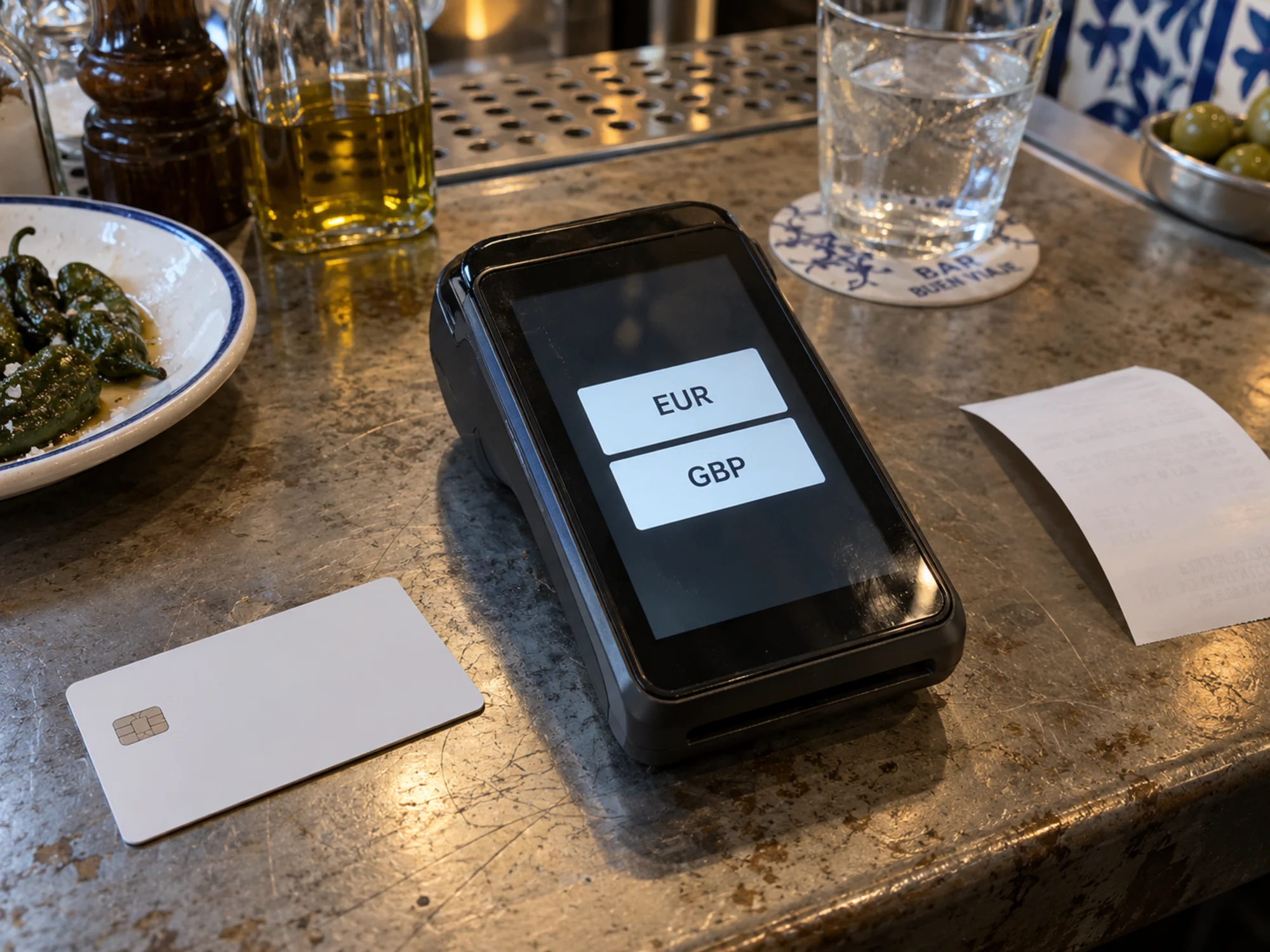
How DCC works and what it costs
When you pay with a German card in Zurich or London, the terminal may ask whether to pay in local currency or in euros. Choose euros and the terminal's provider converts the amount at its own rate, with a markup. Choose the local currency and your card issuer converts it at its rate, possibly with a foreign transaction fee. IndusInd Bank puts a card DCC markup at typically 3 to 5 percent. One Mile at a Time documented an ATM where the DCC option carried a 12.95 percent conversion fee and calls DCC almost never a good deal.
Who earns the markup
DCC is a service of payment providers and acquirers, and merchants and ATM operators earn a commission on each DCC transaction, according to One Mile at a Time. That explains why some terminals preselect the home currency. For a merchant or acquirer it is a revenue line tied to foreign cardholders, a subject for merchant acquiring and card payments in Germany.
The EU rules on showing the price
Regulation (EU) 2019/518 required card providers in the EU to state the total currency conversion charges as a percentage markup over the latest euro foreign exchange reference rate of the European Central Bank, before the payment is made. ATM and terminal operators have to display that information and tell the payer that paying in the merchant's currency is possible. These rules have applied since 19 April 2020, and since 19 April 2021 the card issuer also sends an electronic message with the markup after a card payment in another EU currency, at most once a month per currency, with an option to opt out. The rules now sit in Regulation (EU) 2021/1230 on cross-border payments, which governs cross-border payments in Europe.
Online and on credit transfers
The same regulation covers currency conversion in online banking and apps: before a credit transfer with a conversion, the provider shows the estimated conversion charges and the estimated total in the currency of the payer's account. The comparison to the ECB reference rate makes offers comparable, though the rate a bank actually applies may still differ from it.
Upcoming payments events
Should I pay in local currency or in euros abroad?
In most cases, paying in local currency costs less than accepting DCC. Your card issuer then converts the amount, and its rate plus any foreign transaction fee is usually cheaper than the DCC markup. The EU disclosure on the terminal shows the DCC markup as a percentage over the ECB rate, which lets you compare before you confirm.
Is dynamic currency conversion legal?
Yes, as long as the payer gets the choice and the information. EU law requires the markup to be disclosed before the payment and the option of paying in the merchant's currency to be shown.
What is a currency conversion fee?
A currency conversion fee is the charge for converting a payment from one currency into another. The currency conversion charge can appear as a separate fee or be built into the exchange rate. Under EU rules, card providers express it as a percentage markup over the ECB euro reference rate.
Dynamic currency conversion and Finance Loop
Finance Loop connects card, acquiring and payments teams in Germany that decide how a payment abroad is priced. Finance Loop runs its own Frankfurt and Berlin formats on card payments and instant transfers, and its members meet the payments industry at Payment Exchange in Berlin.
Finance Loop is a professional network supporting the institutional use of emerging technologies in finance, such as AI, digital payments, cloud and blockchain solutions. Finance Loop helps its members build skills and personal networks in these fields: Investment & Digital Assets, Payments & Digital Money, Digital Infrastructure & Sovereignty, and Risk & Compliance.