
Hesse financial center cabinet
The Hesse Financial Center Cabinet brings state government and the financial sector together to discuss the development of Frankfurt's financial center. The forum considers proposals for the location, coordinates priorities and follows the work on a shared strategy. The Hesse Financial Center Cabinet coordinates political and industry discussions; financial supervision remains with the responsible authorities.
The inaugural meeting of the Financial Center Cabinet established a continuing dialogue. The second meeting adopted a financial center strategy and cooperation charter (in German), giving that dialogue a set of subjects and cooperation rules. The agreed framework links location policy with priorities such as financial research, startup support and capital-market funding.
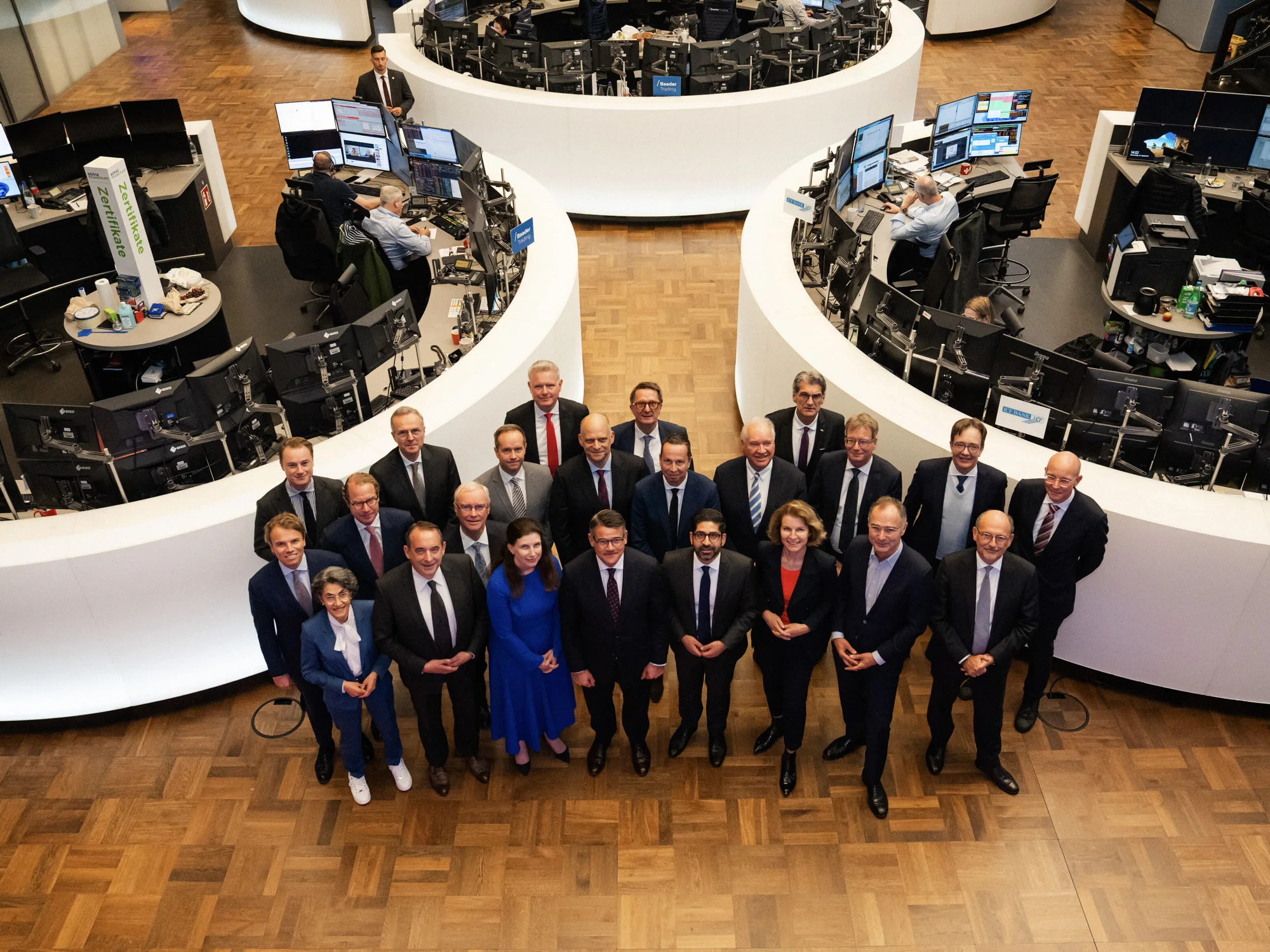
Government and the financial sector
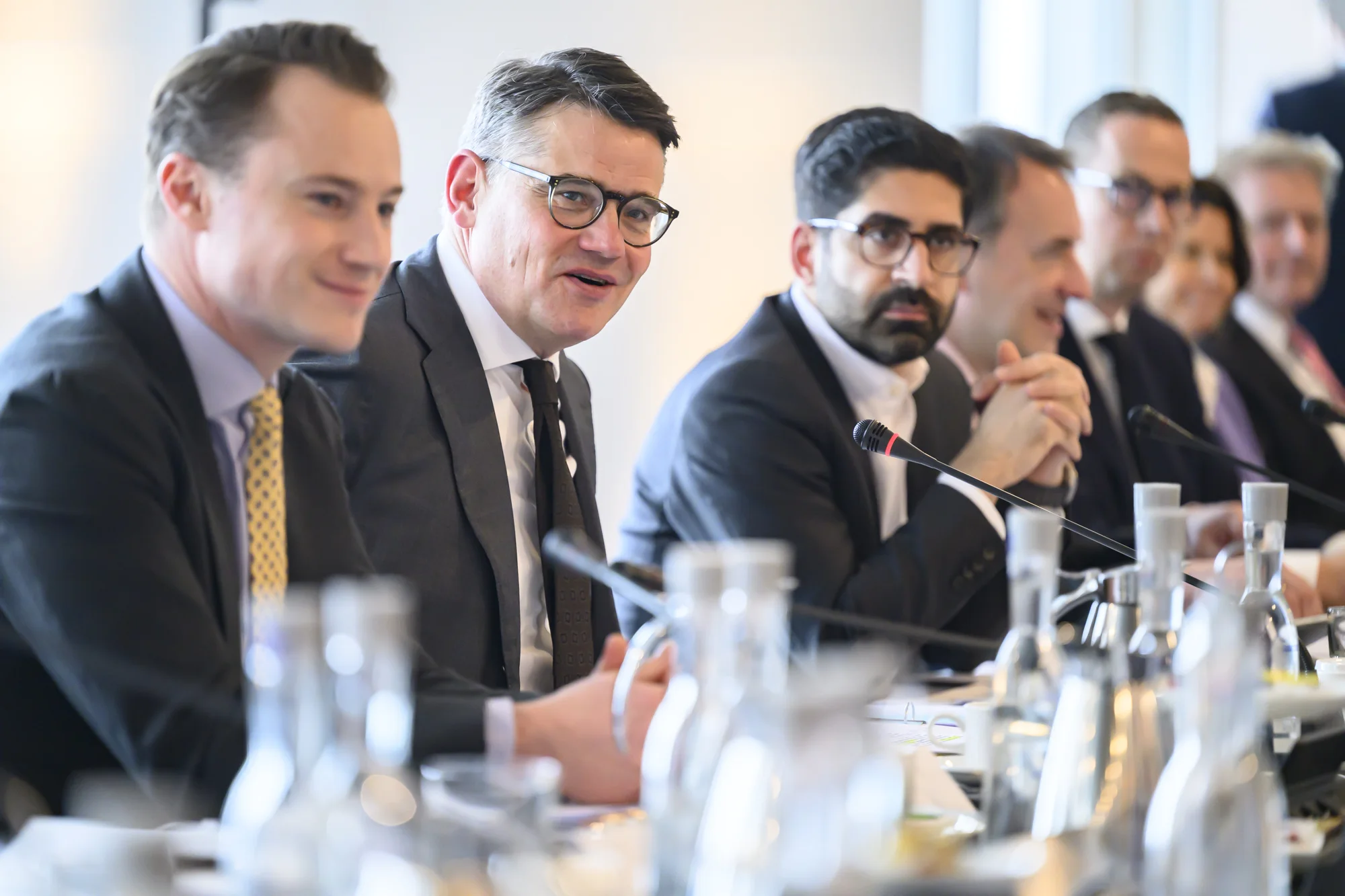
Minister-President Boris Rhein chaired the inaugural meeting of the Financial Center Cabinet (in German), alongside Economy Minister Kaweh Mansoori and Finance Minister Alexander Lorz. Representatives of the financial sector took part, and the meeting combined discussion of the location with a joint resolution on further work.
The cabinet connects economic and financial policy with industry experience. Topics such as access to capital, regulatory conditions and research cooperation cross institutional boundaries. Regular dialogue gives the participants a place to discuss those connections and review progress without transferring their separate responsibilities to a new body.
From proposals to a joint strategy
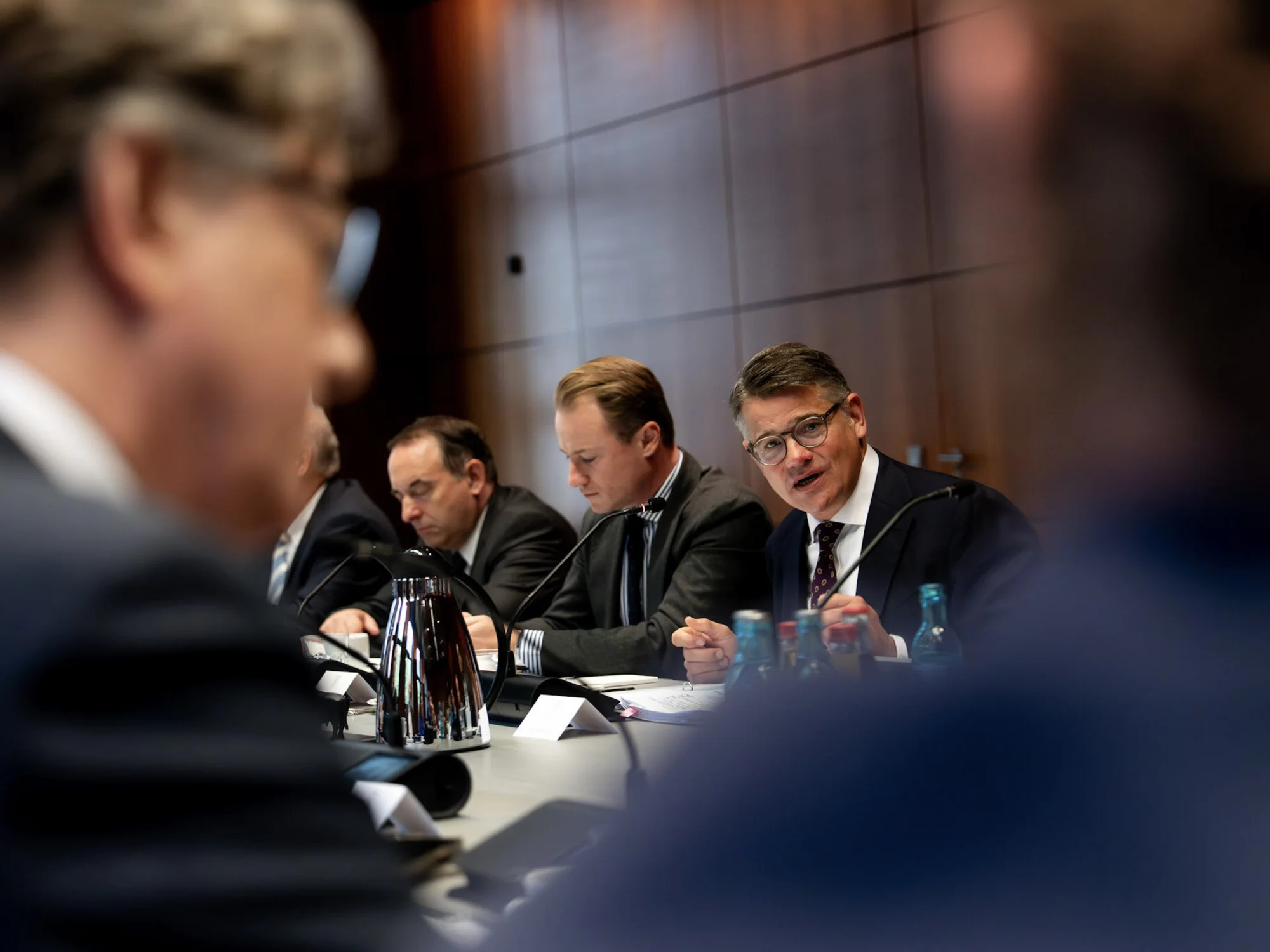
The inaugural meeting received a policy paper developed by the financial center task force. The joint resolution (in German) called for a long-term strategy with measurable objectives and measures. Expectations for the participating organizations were also to be made explicit.
The Frankfurt financial center strategy supplies the priorities for this work. The charter of cooperation addresses how supporters work together. The cabinet provides the dialogue and political coordination; the two documents perform different jobs.
Six areas of work
The strategy covers six areas: business environment, risk and regulation, innovation and startups, sustainable finance, academia and education, and marketing and communication. Capital-market financing and the conditions for investment sit alongside technology and research. The priorities cover both established financial services and proposals for new projects. Research cooperation connects several of these subjects.
Financial literacy provides one example: the second meeting discussed a planned learning app for schools in Hesse, with the Finance Ministry, Goethe University and the Education Ministry involved. The financial education app was discussed as a proposal, with release still to be confirmed.
Local action and wider policy
The strategy separates measures that participants can carry out themselves from positions they must take to other decision-makers. Research partnerships, startup support and joint communication can involve local organizations. Changes to federal or European policy require the responsible institutions.
The cabinet therefore combines work on Frankfurt with advocacy beyond Hesse. The inaugural resolution supported taking financial center proposals to the federal government and European Commission. The roundtable submits positions through regular political and legal procedures; authority over European financial regulation remains with the responsible institutions.
Coordination and progress
The inaugural resolution assigned an important coordination role to Frankfurt Main Finance. Proposals included strengthening its office, developing project management capacity and improving coordination among financial center initiatives. The cabinet was to review the task force's progress and agree on the strategy.
Under the charter, supporters remain autonomous and decide separately on funding, policy papers and individual projects. The financial center report offers a separate account of Frankfurt's development; a strategy or resolution alone is not proof that every proposed measure has been completed.
The financial center and Finance Loop
Frankfurt Main Finance is a strategic partner of Finance Loop. Finance Loop is a member of the association and has organized joint events such as the Sibos side event on emerging technologies.
Finance Loop and Frankfurt Main Finance also bring finance professionals together at joint events. The Digital Finance Night covers institutional digital asset applications. The Emerging Finance side event during AI Week Frankfurt addresses AI adoption and tokenization in finance. Their collaboration also includes other activities in which Finance Loop and Frankfurt Main Finance support each other.
Finance Loop is a professional network supporting the institutional use of emerging technologies in finance. Finance Loop helps its members build skills and personal networks in the field of Investment & Digital Assets, Payments & Digital Money, Digital Infrastructure & Sovereignty, and Risk & Compliance.
Photos: Basti Wöhl / Hessische Staatskanzlei; Salome Roessler / Hessische Staatskanzlei