
Cash usage in Germany
People in Germany use cash, meaning banknotes and coins, for everyday payments. Payment surveys record which methods people choose and how much they spend with each one. The number of cash payments and their total value answer different questions, because a small purchase counts as one payment just as a large purchase does.
Payment behavior helps banks and retailers plan the services their customers need, including cash withdrawals and payment terminals. For households, cash can make spending easier to track and allows payment without a card or smartphone. Studying cash alongside other payment methods shows where people need access to different ways of paying.
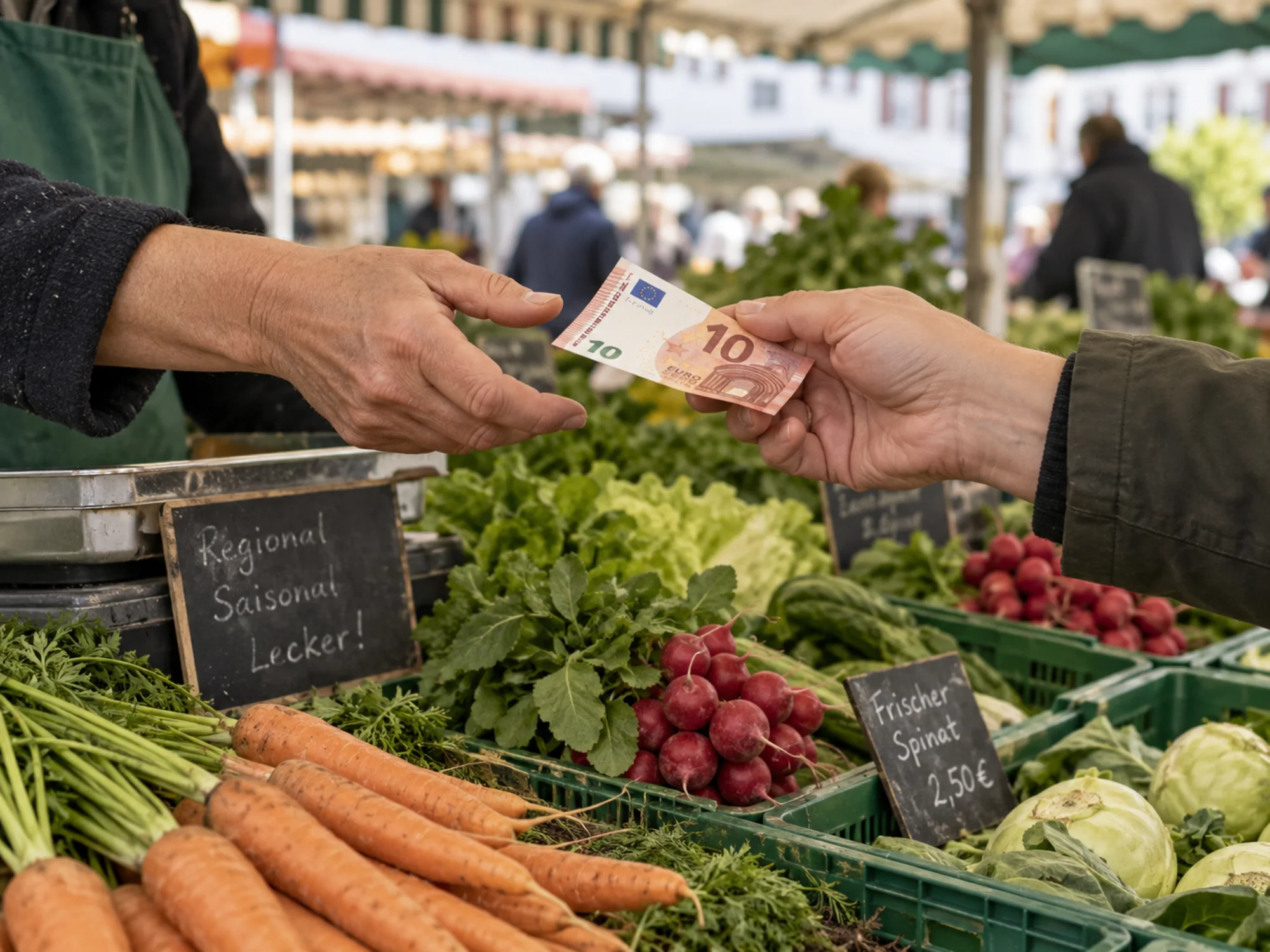
Cash accounts for 45 percent of everyday payments
The study counts 45 percent of transactions and 23 percent of turnover in cash. The debit card has the largest share of turnover at 28 percent. Mobile payments nearly doubled their share and reached ten percent of all payments, with Apple Pay used by 41 percent of mobile payers. Between private persons, 71 percent of payments are still made in cash.
On average respondents carry 98 euros in their wallet, and 43 percent keep additional cash at home. More than 80 percent of the cash they need still comes from ATMs, though more people now withdraw at the supermarket till. The market research institute forsa surveyed 6,070 people aged 18 and over between September and December 2025, and respondents kept a three-day payment diary.
Cash versus digital payments
Cash leads in shops for daily needs, in restaurants, at markets and between private persons. The debit card leads for other purchases in stores. Online, internet payment methods, mainly PayPal, take half of all transactions. 52 percent prefer cashless means of payment and 26 percent prefer cash, and people who use cash name privacy and control over their spending.
Cash could be used in 94 percent of in-store purchases and card or mobile payment in 86 percent, five points more than two years earlier. 73 percent support a duty for merchants to offer at least one digital option next to cash. Card payments in Germany include girocard, debit cards from Visa and debit cards from Mastercard.
What it means for banks and payment providers
For banks the study is a planning document. 29 percent of respondents found it harder than two years before to reach an ATM, mostly in large cities, so branch and ATM networks are under watch. A third of the respondents already make regular instant payments.
63 percent called more European autonomy in payments necessary, and 46 percent had heard of the digital euro. Wero, which Sparkassen, Volksbanken and Raiffeisenbanken, Deutsche Bank, Postbank, ING Deutschland and Revolut have built into their apps or support, competes for the everyday payments that cash and cards cover today.
Upcoming payments events in Germany
How much do Germans pay in cash?
In the Bundesbank study, 45 percent of everyday payments and 23 percent of turnover were in cash. In 2023 the share by number was 51 percent.
Do Germans want to keep cash?
80 percent say it is important that cash payment remains possible, and 68 percent want cash to be accepted at every point of sale. Only four percent of respondents never use cash.
Who publishes the figures on cash usage in Germany?
The Deutsche Bundesbank publishes a study on payment behavior in Germany every two years. The data comes from a survey and a payment diary run by the research institute forsa.
Cash usage and payments in Germany and Finance Loop
Finance Loop covers how Germany pays in its Payments & Digital Money track, from cash and girocard to Wero and the digital euro. Bankers and payment providers meet at Finance Loop events in Frankfurt, Munich, Berlin and Hamburg.
Finance Loop is a professional network supporting the institutional use of emerging technologies in finance, such as AI, digital payments, cloud and blockchain solutions. Finance Loop helps its members build skills and personal networks in these fields: Investment & Digital Assets, Payments & Digital Money, Digital Infrastructure & Sovereignty, and Risk & Compliance.