
Market entry in Germany
Market entry in Germany is the process of preparing a business to offer its products to German customers. For a financial technology company, the activities it performs determine whether a financial authorization is needed. Planning the regulatory route together with customer delivery helps a firm distinguish a regulated financial service from the technology supporting it.
Market entry requires firms to examine the permissions that cover their planned services, including stablecoins or crypto custody where relevant. An eligible EU or EEA provider may use a notified cross-border route, while other firms must assess authorization or applicable exceptions. Technology suppliers also need to prepare for the security and outsourcing requirements of their financial customers.
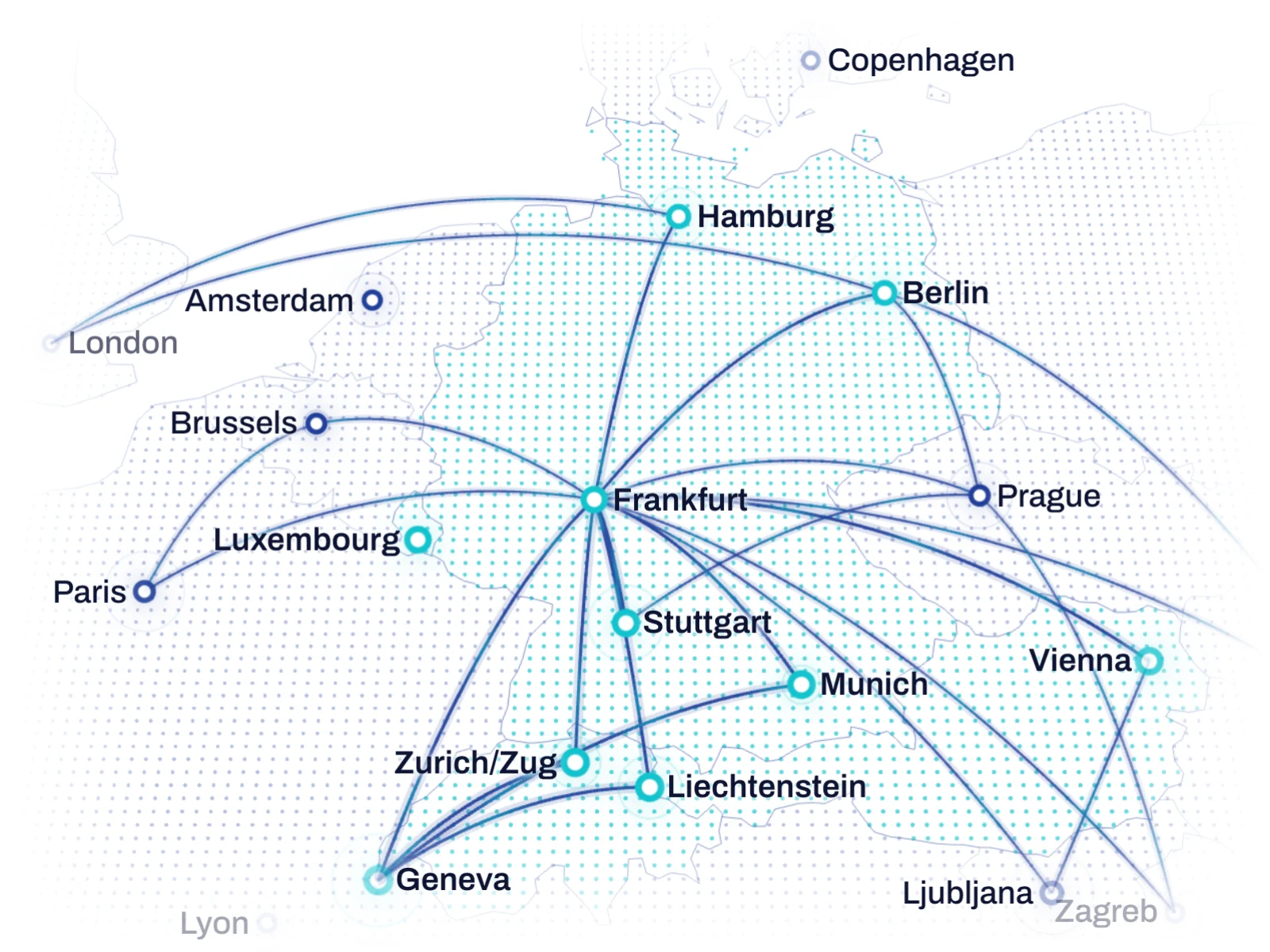
Which license the product needs
The business model decides the law. Deposits and lending need a banking license under section 32 of the Banking Act, with at least 5 million euros of capital and two fit and proper managing directors. Payment and e-money institutions are licensed under the Payment Services Supervision Act, with initial capital from 20,000 euros for money remittance to 350,000 euros for e-money. Crypto-asset services need a CASP license under MiCA. BaFin license lists the types. Once BaFin has a complete banking application, it has six months to decide. BaFin offers a fintech contact form for founders who are unsure whether their model needs a license; it does not give legal advice.
From another EU state: the passport
A firm licensed in another EU or EEA state notifies its home supervisor and can then serve German customers across the border, through a branch or, for payments, through agents. Under Article 28 of PSD2 the home authority forwards a complete notification within one month, and section 39 of the German Payment Services Supervision Act lets the firm work in Germany without a BaFin license. Under Article 65 of MiCA a crypto-asset service provider may start at the latest on the 15th calendar day after its notification. EU passporting has the details. The firm's marketing still has to follow German rules, such as the consent rules for email advertising.
From the UK, Switzerland or the US
A firm from outside the EU has no passport. The non-EU firm can apply for a German license, or license a subsidiary in another EU state and passport from there. For banking and financial services, BaFin can exempt firms from parts of the Banking Act under section 2(4) (in German) where they do not need its supervision, which matters for foreign firms that serve only professional clients across the border. A Swiss firm that holds a FINMA fintech license needs a separate EU authorization for German customers.
Selling to banks without a license
A software or data vendor that sells to banks usually needs no license of its own, but its customers pass their rules on to it. If the service supports a critical or important function, DORA sets what the contract must contain, and German banks run an outsourcing review under the MaRisk, described on outsourcing and cloud in German banking. The vendor should have its security documentation, exit plan and audit rights ready before the first pilot. Doing business in Germany covers how banks buy.
Setting up the company
Germany Trade & Invest, the federal economic development agency, helps foreign companies set up business in Germany, from company formation and taxes to visas and incentive programs. A firm licensed by BaFin has its head office in Germany; a passporting firm can serve German customers without a local company.
Upcoming Finance Loop events
Does a fintech need a BaFin license to enter Germany?
Only if its business is regulated and it has no EU passport. A payment or e-money institution licensed in another EU state can passport; a software vendor that sells to banks needs no license, but must meet its customers' outsourcing and DORA requirements.
How long does a BaFin license take?
BaFin has to decide on a banking license within six months of receiving a complete application. The clock starts only when business plan, capital, management and risk organization are all documented.
Where should a fintech start in Germany?
Where its customers are. Frankfurt has the ECB, the Bundesbank, Deutsche Börse and many banks; Berlin has the most fintechs; Munich has Allianz and Munich Re. Fintech in Germany compares the hubs.
Entering Germany with Finance Loop
Finance Loop supports fintech market entry by researching relevant professional contacts and arranging agreed first conversations. Marketing Managers, Partnership Managers and Business Development Managers can request a brief covering the product, target audience and people they need to reach. Agreed work can include contact research, approved German-language outreach, follow-up and introductory calls with a documented handover.
The DACH fintech go-to-market service covers wider cross-border relationship planning where relevant. A German assignment defines German activities and audiences; work concerning Austria or Switzerland needs its own agreed scope.
A company new to Germany can sponsor a webinar (EUR 2,500 net) and help set its agenda, sponsor a meetup (EUR 3,000 net) with a presentation slot of up to 20 minutes, host its own event (from EUR 7,000 net), become a partner with year-round benefits (Premium Partner from EUR 7,800 net a year), or join a delegation to events such as Frankfurt Digital Finance, with personal introductions from the Finance Loop team (EUR 1,200 net per person).
Trading providers and finance creators
Trading providers entering Germany need to identify the financial audiences that match their product and permitted activities. Finance Loop can research German-speaking finance educators and creators, including key opinion leaders (KOLs), assess their subject coverage and prepare a shortlist for approval. The brief specifies whether the company seeks platform education, professional partnerships or another defined business objective.
German-language content does not establish that an audience is located in Germany. Available country information and the intended target market therefore belong in the creator review. Finance Loop can coordinate approved first contacts, follow-up and joint introductory calls, then hand the relationship to the company team responsible for commercial terms and content approvals.
Market entry in Germany and Finance Loop
Finance Loop connects fintech and trading company teams with relevant professional audiences for emerging technologies in finance. A company can request market-entry support by describing its product, target market and intended professional relationships.
Finance Loop is a European professional network with a current focus on Central Europe. Finance Loop connects companies and professionals across these subject areas: Investment & Digital Assets, Payments & Digital Money, Digital Infrastructure & Sovereignty, and Risk & Compliance.